
Last updated November 4, 2026
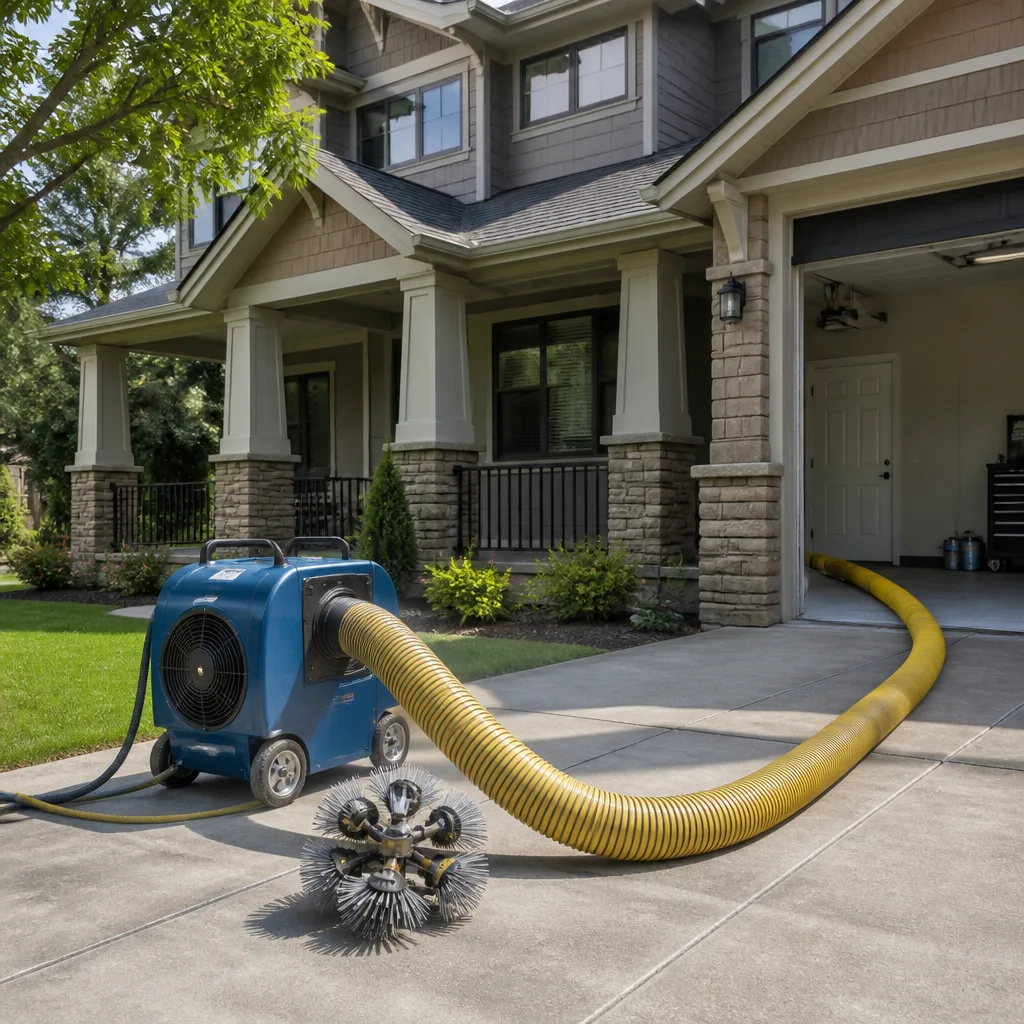 Whole-home duct cleaning
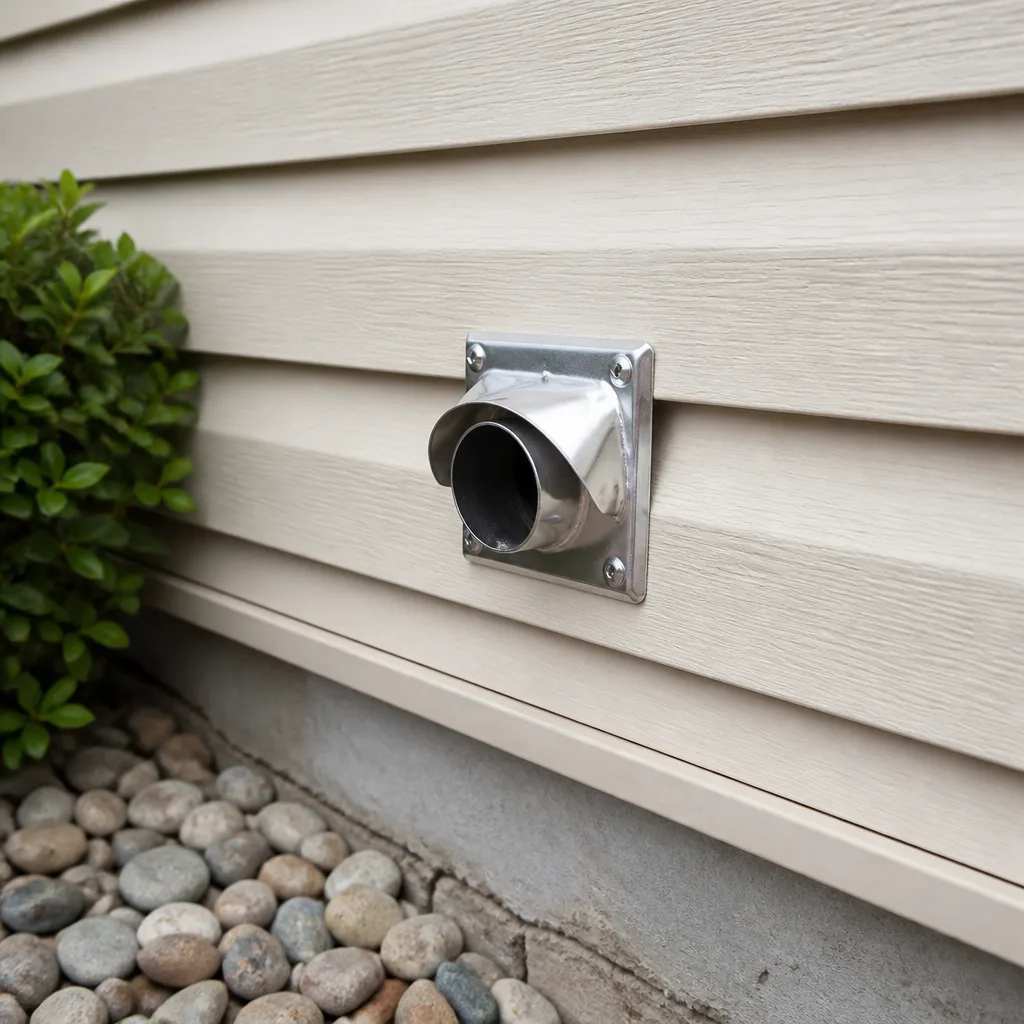 Dryer vent cleaning
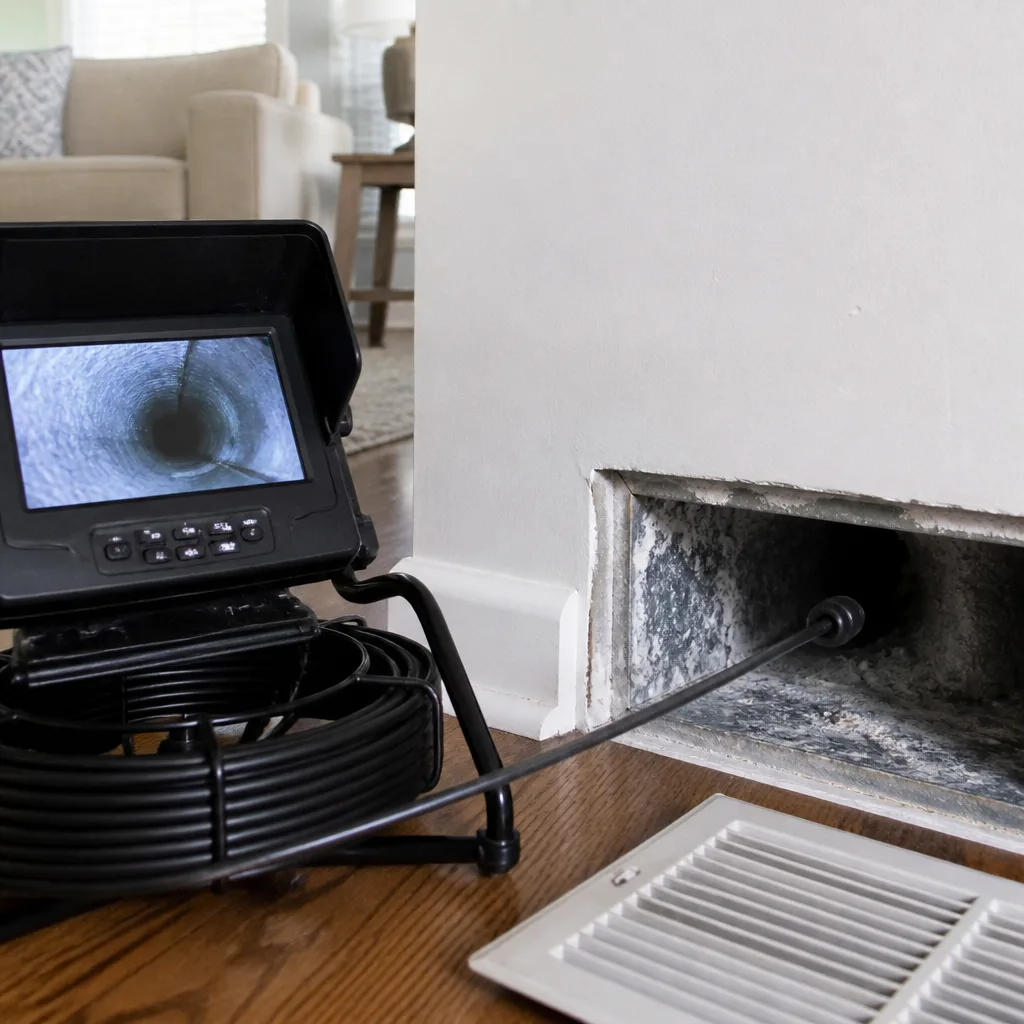 Camera inspection
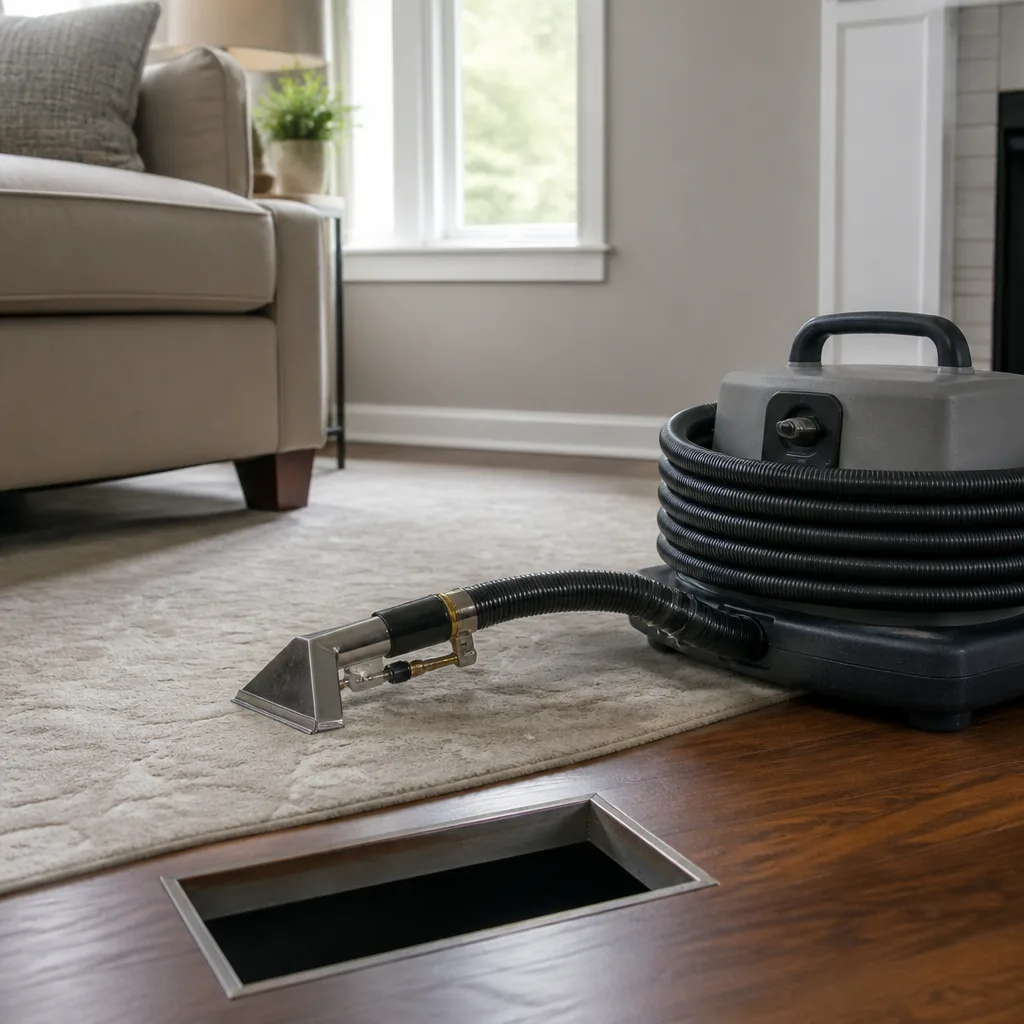 Sanitizing & deodorizing
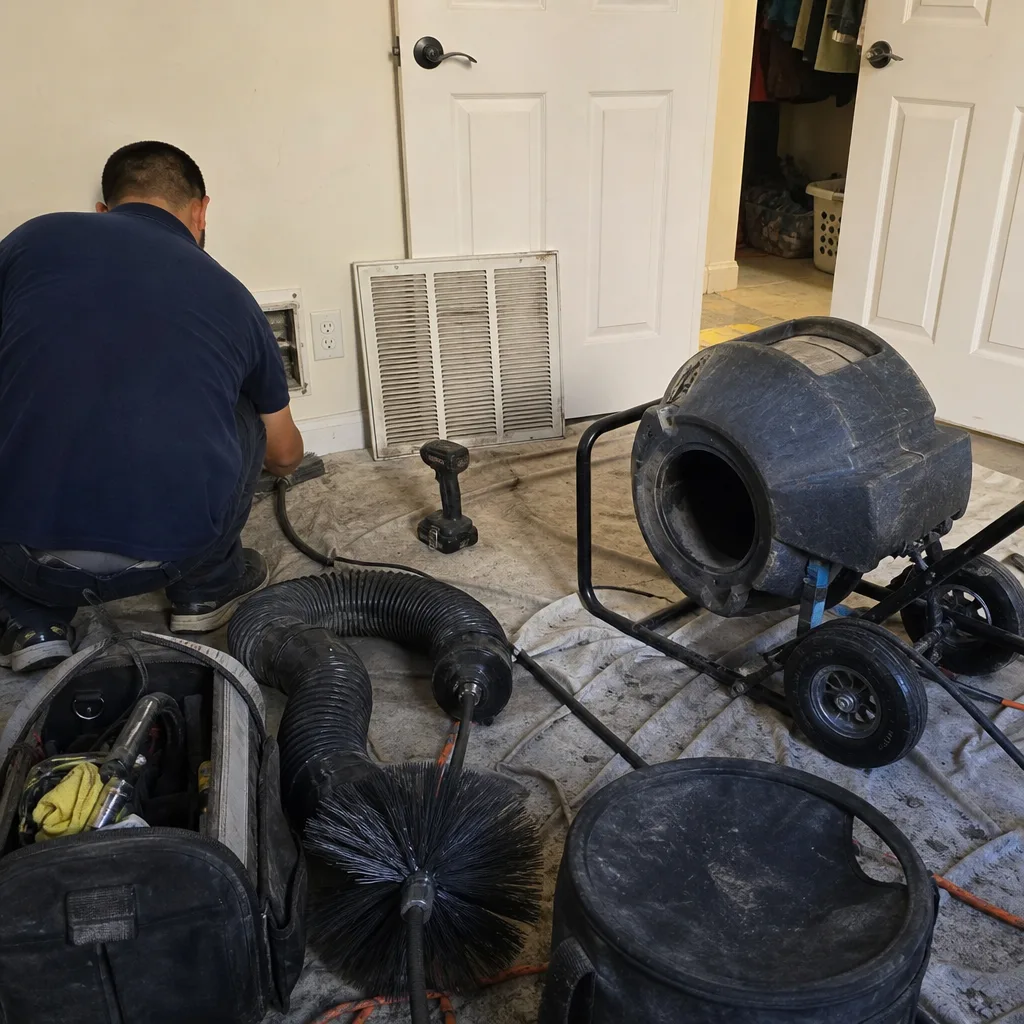
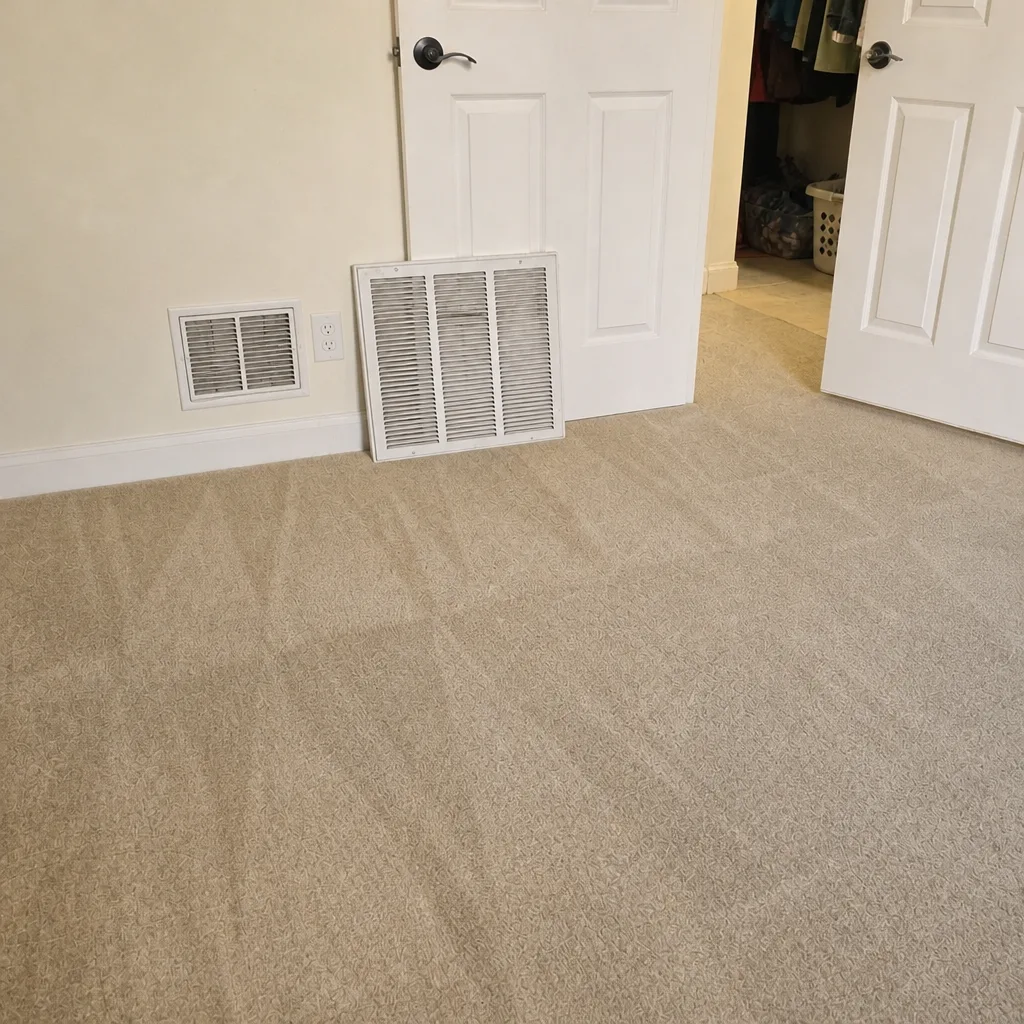
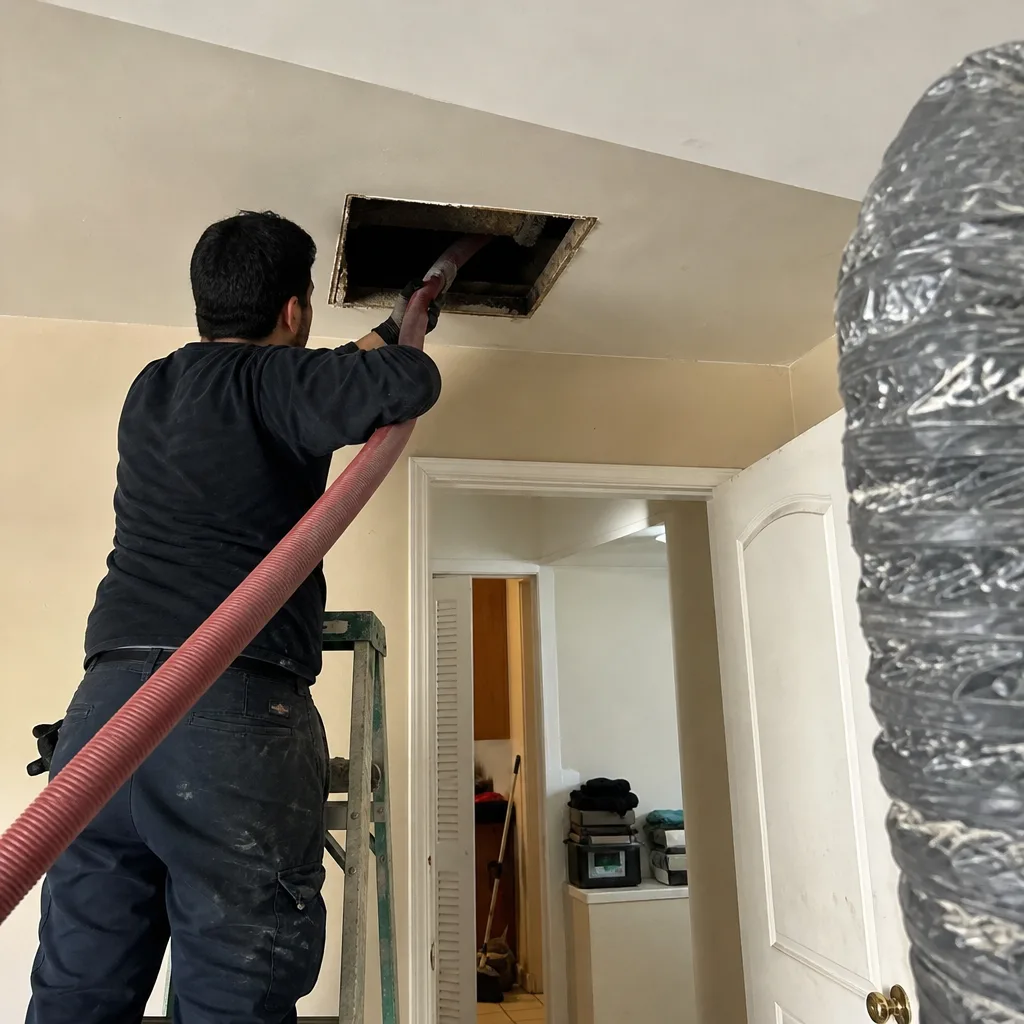
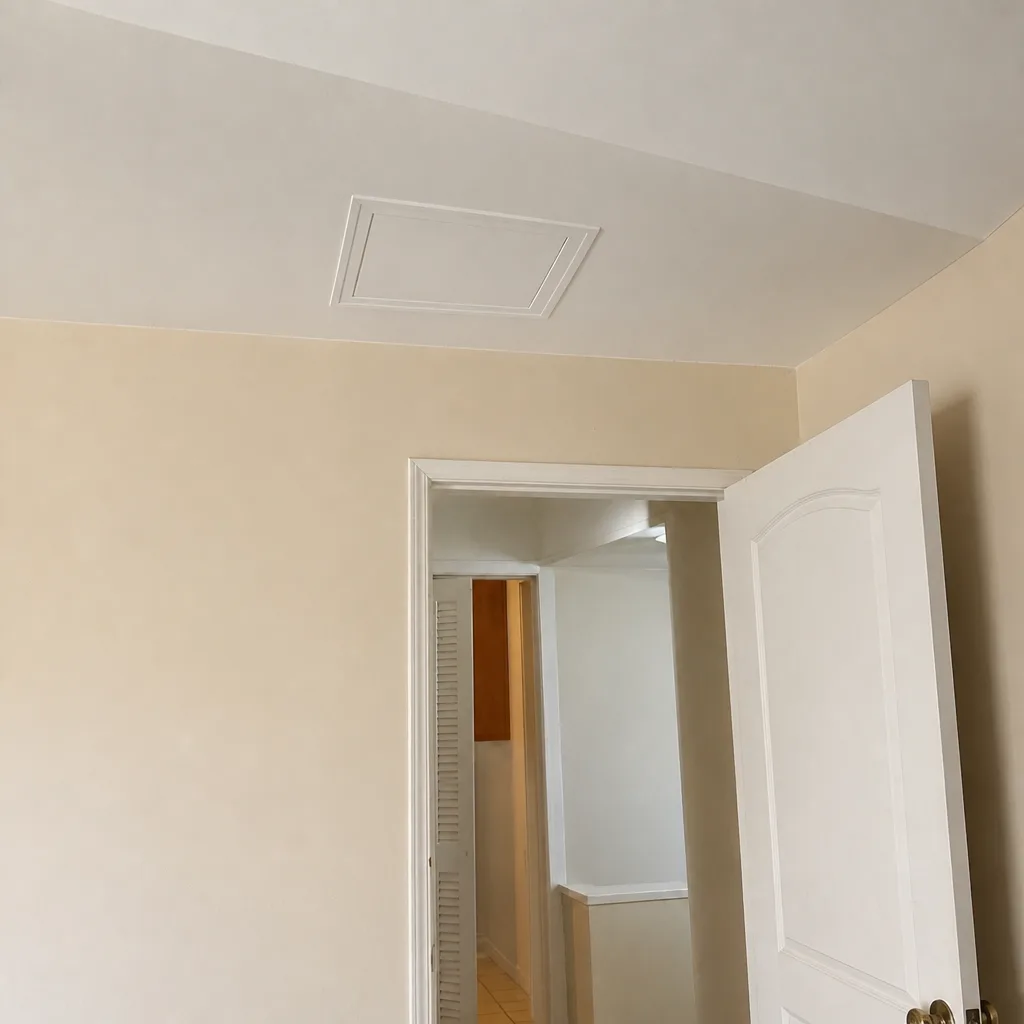
Whole-system duct and dryer vent check with before-and-after photos - you see exactly what came out of your vents
That "$99 whole-house special" is a bait ad - the real number appears once they are in your hallway, or the "clean" is a shop-vac at the register. We photograph the inside of your ducts before and after instead.
Air Duct Cleaning Troubleshooting in Chatsworth: Common Problems and How to Fix Them
If changing your air filter every 90 days still hasn’t stopped the musty smell or the room that never cools down, the filter was never the problem – the duct was. Most homeowners in Chatsworth spend years chasing symptoms with new filters and stronger air fresheners, when the actual issue sits inside the duct system, accumulating dust, restricting airflow, and quietly working against the HVAC equipment. This guide walks through the specific complaints we hear most often, what each one means, where the root cause usually lives, and which problems actually require cleaning versus repair. By the end, you’ll know how to read what your ductwork is broadcasting before you spend another dollar on the wrong fix.
Quick Answer
Air duct cleaning problems in Chatsworth typically show up as weak airflow, persistent musty or burning odors, visible debris at registers, or rooms that never reach the thermostat temperature. The fix depends on the root cause: accumulated dust and debris respond to professional air duct cleaning with negative-pressure equipment, while disconnected or damaged ductwork requires air duct repair. A professional inspection with vacuum testing can distinguish between the two in a single visit.
Styles & brands we work with
- Whole-home duct cleaning
- Dryer vent cleaning
- Camera inspection
- Sanitizing & deodorizing
Table of Contents
- Symptom-to-Cause Matrix: What Your Ducts Are Telling You
- Cleaning vs. Repair: How to Tell the Difference Before You Call
- What a Negative-Pressure Vacuum Test Reveals That a Flashlight Can’t
- Chatsworth-Specific Triggers: Santa Ana Winds and Fine Particulate Loading
- The Decision Tree: Clean, Repair, or Both
- Why Consumer-Grade Tools Miss What Professional Equipment Finds
- Dryer Vent Troubleshooting as a Separate Safety Issue
- When Duct Cleaning Crosses Into Air Quality Improvement
Symptom-to-Cause Matrix: What Your Ducts Are Telling You
Ductwork doesn’t fail silently. It broadcasts symptoms, and each symptom maps to a predictable set of causes. Here’s how to interpret what you’re seeing and feeling in your Chatsworth home.
One Hot Room, Every Season
A single room that never cools in summer or never warms in winter usually points to a restriction or a disconnection in that specific branch line. The main trunk might be carrying conditioned air fine, but a collapsed flex duct, a kinked section, or a damper stuck partially closed will starve that room. If the register blows weakly while others blow strong, the problem is in the duct run, not the HVAC unit.
Burning Smell on Startup
At the start of each heating season, that brief burning odor is dust that settled on the heat exchanger during months of disuse. It’s normal once or twice. But if the smell persists beyond a few cycles, or if it returns every time the system runs, you’re smelling accumulated debris inside the ductwork being repeatedly heated and cooled. That’s a cleaning issue, and it won’t resolve on its own.
Visible Debris at Registers
When you see dust, pet hair, or particles collecting around supply registers, that’s the visible fraction of what’s moving through the duct interior. If it’s at the register, it’s through the entire system. This is the single clearest signal that the ductwork has accumulated enough loose material to warrant professional cleaning.
Musty or Stale Odor That Never Leaves
A persistent musty smell from the vents, especially when the fan runs, indicates organic material decomposing somewhere in the system. This could be dust harboring moisture, a dead pest, or microbial growth on duct surfaces. None of these go away with air freshener or a filter swap. The source is inside the duct.
Airflow Imbalance Between Rooms
When some rooms blast air and others barely whisper, the issue is rarely the blower. It’s most often duct leakage: conditioned air escaping through gaps, disconnected sections, or holes in the duct walls before it reaches the registers. Leaks on the supply side bleed pressure, which is why those distant rooms never get enough air. This is a repair problem, not a cleaning problem.
Here’s a quick reference matrix:
- Weak airflow in one room: likely a collapsed flex duct, kinked line, or closed damper (repair)
- Weak airflow across the whole house: likely filter blockage, blower issue, or major duct restriction (inspect first)
- Dust on surfaces hours after cleaning: duct leakage pulling attic or crawlspace air into the return side (repair + cleaning)
- Persistent odors from vents: accumulated debris or moisture inside ducts (cleaning)
- Noisy operation, whistling or rattling: loose duct sections, gaps, or disconnected joints (repair)
- Visible debris at registers: system-wide accumulation (cleaning)
Cleaning vs. Repair: How to Tell the Difference Before You Call
Many homeowners in Chatsworth call us for cleaning when what they actually need is repair, or vice versa. The two services solve different problems, and treating one as the other wastes time and money. Here’s how to distinguish them.
Cleaning addresses accumulated material: dust, pet dander, construction debris, and particulate that has settled inside the ductwork over time. The ducts themselves are structurally sound. The job is to remove what shouldn’t be there, restore airflow, and improve the air moving through the system. This is what Duct Cleaning Chatsworth handles with Rotobrush and Nikro negative-pressure systems that agitate and extract rather than just brush or vacuum.
Repair addresses the ductwork’s structure: gaps, disconnections, damaged sections, crushed flex runs, or failing seals. If conditioned air is escaping into the attic or crawlspace, no amount of cleaning will fix the room that never cools. The duct itself is compromised.
The tell-tale signs that separate the two:
- Odor = cleaning. Smells come from material inside the ducts, not from a gap in a seam.
- Dust escaping from registers = cleaning. That’s loose particulate being pushed through by the fan.
- Weak airflow in specific rooms = repair. The air is being lost somewhere along the run before it gets to the register.
- Higher energy bills with no change in comfort = often repair. Leaky ducts mean the system runs longer to hit the same temperature.
- Whistling, rattling, or banging = repair. Loose metal or disconnected sections make noise as air moves past them.
Some homes need both. A duct system that’s been leaking for years will have pulled attic dust and insulation into the return side, leaving the interior coated even after the gaps are sealed. In those cases, the right sequence is repair first to stop the ongoing contamination, then cleaning to remove what accumulated while the leaks were active.
What a Negative-Pressure Vacuum Test Reveals That a Flashlight Can’t
A flashlight inspection can see the first foot or two of duct from the register opening. It cannot see the coiled flex run behind the wall, the transition points at the plenum, or the far end of the trunk line where the worst buildup usually lives. That’s why a visual check alone misses the majority of duct contamination.
The professional standard involves putting the duct system under negative pressure and using high-velocity air tools to dislodge debris while the vacuum captures it. This approach does two things that a visual inspection cannot:
- It reveals what’s actually inside, not just what’s visible. When the system is sealed and placed under negative pressure, technicians can open each register in sequence and feel the pull of air. A weak pull indicates a restriction or a leak somewhere in that branch. The system itself reports the problem.
- It extracts rather than redistributes. Brushing alone pushes dust around. Without negative pressure, loosened debris can settle deeper in the system or blow into the living space. The vacuum containment is what makes cleaning effective instead of cosmetic.
We run Rotobrush and Nikro platforms because they’re engineered for this specific task: agitate-and-capture, not just surface brushing. The Abatement Technologies equipment we stock extends the same principle to environments where duct contamination is beyond routine household dust, which matters in a place like Chatsworth where renovation and wildfire-season particulate add to the usual load.
The DIY temptation is a shop vac attached to a register opening. What that actually does is remove the loose dust right at the opening while leaving the compacted material deeper in the run untouched. It’s the duct equivalent of wiping the rim of a glass and considering it washed.
What the negative-pressure test tells us:
- Which branches are restricted: uneven pull at different registers maps the restriction points
- Where leaks are located: pressure escaping through gaps changes how the whole system behaves under vacuum
- How much material is entrained: the volume and character of what’s captured tells us how long buildup has been accumulating
- Whether the return side is pulling from conditioned space or from the attic: which determines if you have a leak that makes cleaning secondary to repair
Chatsworth-Specific Triggers: Santa Ana Winds and Fine Particulate Loading
Chatsworth sits at the edge of the San Fernando Valley, where the dry Santa Ana wind season does something specific to duct systems. The winds carry fine dust and particulate that is smaller and lighter than typical household dust. It infiltrates around window seals, through soffit vents, and into attic spaces, where it settles into insulation and gets drawn into the return side of leaky ductwork.
This fine particulate behavior means duct systems in Chatsworth load faster than identical systems in humid coastal climates. Dry air keeps particles suspended longer, so they travel deeper into the duct interior before settling. Homes here often show a characteristic fine, almost powdery coating inside duct runs that has a different texture than the fibrous dust common in other regions.
A few local factors compound this:
- Extended HVAC runtime. Chatsworth’s summer heat means systems run hard for months, pulling a continuous stream of that particulate through the return side whenever ducts leak.
- Renovation residue. Many homes in the area have been updated over the years. Drywall sanding dust and construction debris swept into unfinished duct systems during remodels stays there until someone removes it.
- Pets indoors. With limited yard space in many Chatsworth neighborhoods, indoor pets contribute a higher concentration of dander and hair to the airflow than a home where animals spend more time outside.
- Attic duct exposure. Much of the housing stock in this area runs ductwork through unconditioned attic space, where temperature swings and fine particulate infiltration are both more aggressive.
The practical takeaway: if you live in Chatsworth, your ducts likely accumulate material faster than the generic “every three to five years” advice suggests. We recommend an inspection based on symptom observation rather than a calendar. When the register starts showing that fine powder, or when you notice dust settling on surfaces within days of cleaning, the system is telling you it’s time.
The Decision Tree: Clean, Repair, or Both
When a homeowner in Chatsworth notices a duct-related symptom, the next step follows a clear branching path. Here’s the decision process we walk through, written as a sequence to follow at home.
- Identify the primary symptom. Is it odor, airflow, dust, or noise? Odor and dust point toward cleaning. Airflow loss and noise point toward repair.
- Check the filter. If it’s clogged, replace it and observe for 48 hours. A fresh filter resolving the issue means the filter was the bottleneck, not the ducts.
- Inspect visible ductwork. In the attic or crawlspace, look for disconnected sections, crushed flex runs, or visible gaps at joints. If you find them, that’s a repair call before any cleaning.
- Check register airflow. Hold a tissue at each register with the fan running. Note which registers blow strong and which are weak. The weak ones map the problem branches.
- Observe dust accumulation. If surfaces in the home collect visible dust within a few days of cleaning, and the filter isn’t the issue, the ducts are either leaking or loaded. Both paths lead to a professional inspection.
- Consider the timeline. If the home had renovation work in the past and the ducts were never cleaned afterward, assume construction debris is present. Cleaning is the starting point.
- Make the call. If symptoms point to cleaning, schedule a professional cleaning with negative-pressure equipment. If symptoms point to repair, schedule an inspection that includes pressure testing. If both are indicated, do repair first, then clean.
That last point matters. Cleaning a duct system that’s still leaking is like replacing a filter in a system with a hole in the return side. It helps briefly, then the leak reintroduces the same contamination. In our experience, Chatsworth homes with attic duct runs and a history of renovation often need both: the ductwork gets sealed, then the interior gets cleaned. One visit can address both if the company does both services, which is why we built our three-service scope around that pairing.
Why Consumer-Grade Tools Miss What Professional Equipment Finds
There’s a meaningful gap between what a homeowner can reach with consumer tools and what professional equipment actually does. That gap is the difference between appearance and extraction.
A consumer shop vac attached to a register mouth reaches about two to three feet of duct. It has no agitation mechanism beyond air velocity, which is too weak at that point of contact to dislodge compacted material. It has no containment strategy, so what it does loosen partially re-enters the living space during the process. And it cannot access the trunk line, the plenum, the return drop, or any section behind finished walls.
Professional platforms like Rotobrush and Nikro are engineered around a different principle: mechanical agitation combined with sustained negative pressure. The agitation head reaches deep into the duct run, breaking the bond between debris and duct surfaces. The negative pressure captures the loosened material at the point of disturbance rather than letting it resettle or blow into the home. That’s the system remediation professionals use, and it’s the same class of equipment we run in Chatsworth.
This matters for troubleshooting because it changes what an inspection can reveal. A technician with professional extraction equipment can open the system under vacuum and observe what comes out. That observation is diagnostic: the volume, texture, and composition of the debris tell you whether the problem is routine dust, renovation residue, or something more concerning.
We also stock Abatement Technologies equipment for environments where the duct interior has been exposed to more than routine household air. That includes post-renovation situations, smoke infiltration during wildfire season, or any case where particulate character suggests the duct environment was compromised. Consumer tools simply don’t have that capability envelope.
Dryer Vent Troubleshooting as a Separate Safety Issue
While duct cleaning addresses indoor air quality, dryer vent cleaning is its own category with a different primary consequence: fire safety. The two are often handled together, but the troubleshooting logic is distinct.
Dryer vents accumulate lint through a different mechanism than HVAC ducts. Lint doesn’t aerosolize the same way dust does. It collects at bends, at the exterior termination, and anywhere the airflow slows enough to allow deposition. Over time, that accumulation restricts airflow, which increases drying times, raises dryer motor temperature, and creates the conditions that make dryer vents a leading cause of residential fires.
The symptoms to watch:
- Clothes take two or more cycles to dry. This is the most common early flag. The heat is there, but the moisture has nowhere to go because the vent is restricted.
- The dryer exterior gets unusually hot. Trapped heat in the drum and the exhaust path means the vent isn’t moving air fast enough.
- A burning smell during operation. Lint near the heating element or accumulated in the vent path can smolder. This is urgent.
- The exterior vent flap doesn’t open fully when the dryer runs. Weak exhaust flow means weak flap movement. That’s a direct mechanical test you can do from outside.
- Visible lint around the exterior vent opening or on nearby landscaping. That indicates buildup at the termination point and possibly a partial blockage inside the run.
If these signs are present, the vent needs mechanical cleaning. A ladder, a leaf blower at the wall, and a homeowner’s shop vac at the laundry end will remove surface lint but won’t clear a fully packed run. The longer the vent path, the more critical professional tools become. Many laundry rooms in Chatsworth are located in interior spaces with long vent runs to the exterior, which makes them more prone to restriction than short, direct runs.
Treat dryer vents as a fire hazard, not a convenience issue. When drying times climb or the dryer runs hotter than it used to, that’s the vent telling you it’s time.
When Duct Cleaning Crosses Into Air Quality Improvement
Cleaning removes what’s already in the ducts. Air quality improvement is about what happens after the cleaning is done. In Chatsworth, where dry conditions keep fine particulate airborne for longer, many homeowners find that a one-time duct cleaning feels incomplete without a follow-up strategy.
That’s where system-level filtration and air quality equipment come in. We work with Honeywell and Aprilaire product lines because they’re familiar names homeowners already know from thermostats and HVAC components. These brands make filtration and ventilation products that install at the system level, treating air as it moves through the ductwork rather than in a single room.
Guardsman products, which address surface and material protection, sit adjacent to this conversation when the concern is broader home care. But for ducts specifically, the sequence that makes sense is:
- Repair if needed. Seal the leaks so the system stops pulling attic or crawlspace air.
- Clean the interior. Remove accumulated particulate so the system starts from a neutral state.
- Upgrade filtration if warranted. A media filter or electronic air cleaner at the system level keeps the duct interior cleaner between professional cleanings.
This is the bridge between a one-time service and an ongoing indoor air quality plan. It’s also where our specialization shows: because we focus narrowly on duct and ventilation systems rather than general HVAC work, the equipment and the techniques move in the same direction. Clean ducts are the start. Sealed, repaired ducts are the finish. And the air quality improvements in between are what keep it that way.
Common Mistakes to Avoid
- Assuming a new filter solves everything. Chatsworth homeowners often swap in a fresh filter, notice brief improvement, and declare the problem fixed. If the duct interior is loaded, the filter clogs faster and the symptom returns. A filter catches what reaches it. It does nothing for what’s already inside the duct.
- Using a shop vac and calling it clean. The vacuum reaches the first few feet of duct. The rest of the run stays loaded. This creates false confidence while leaving the actual problem untouched.
- Delaying a dryer vent issue because the dryer still works. Extended drying times don’t stay mild forever. The restriction worsens with every load, and the timeline to a fire hazard shortens as the vent packs tighter. Treat the symptom when it first appears.
- Paying for cleaning when the ducts are leaking. If the system pulls attic air through gaps, cleaning removes current dust but doesn’t stop the source. The same contamination returns within months. Diagnose leakage before paying for cleaning.
- Ignoring the “dust everywhere” signal. When surfaces in a Chatsworth home collect visible dust within days of cleaning, the ducts are either leaking or loaded. Both conditions warrant professional inspection, not another round of furniture polish.
- Waiting for a calendar date instead of watching for symptoms. The “every five years” guidance doesn’t account for Santa Ana particulate, renovation residue, or indoor pets. Symptom-based timing works better in this climate.
- Treating duct cleaning and dryer vent cleaning as the same service with different marketing names. They require different equipment, different techniques, and different safety reasoning. Hire a company that treats each as its own discipline, not an upsell.
See the difference
 Before
 After
 Before
 After
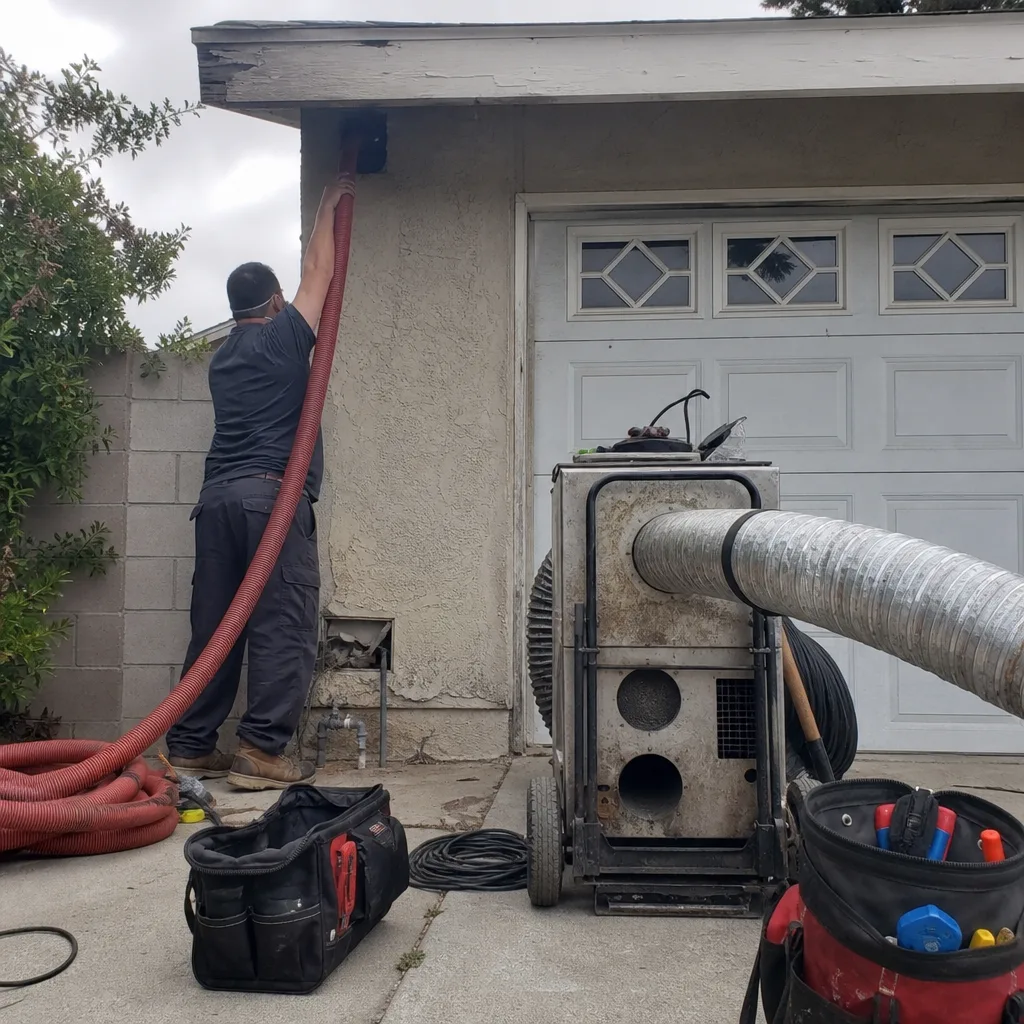 Before
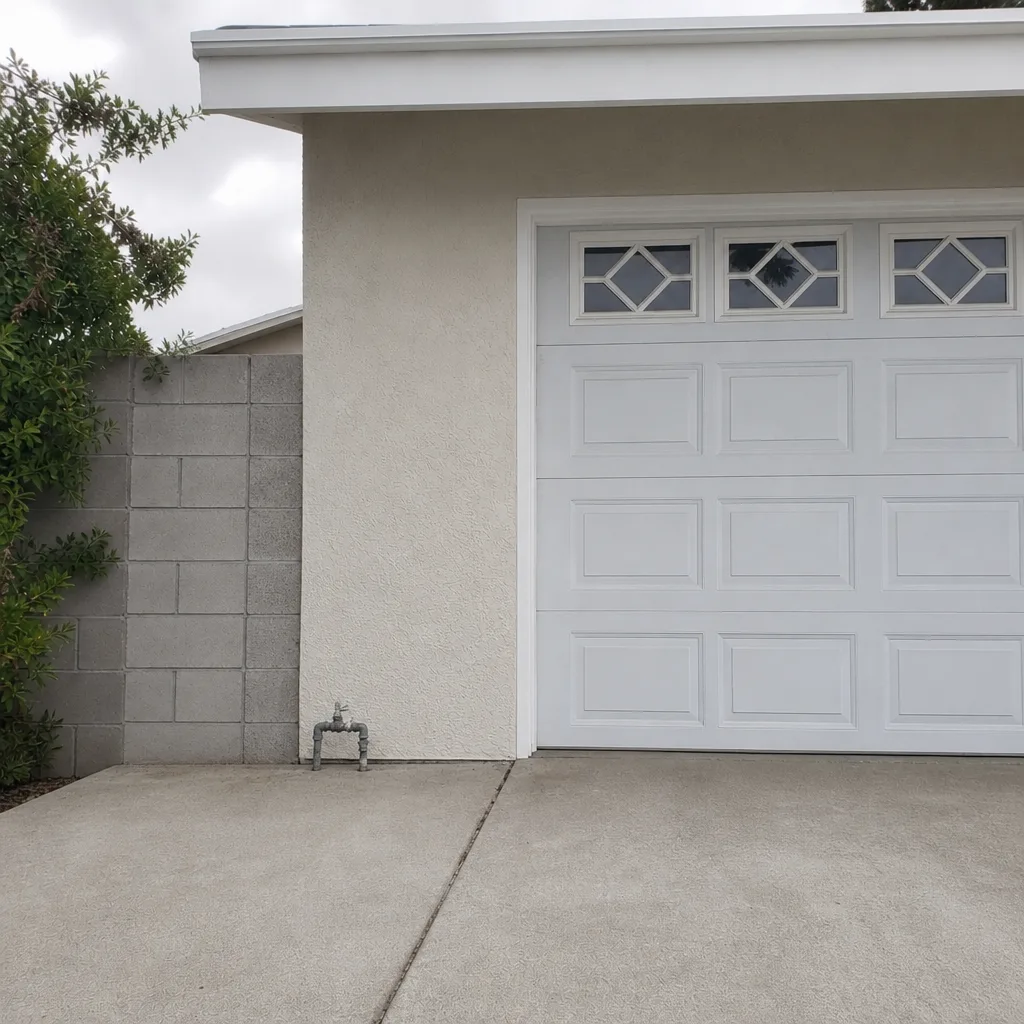 After
When to Call a Professional
You should call a professional when the symptoms point to anything deeper than a clogged filter. Persistent odors, weak airflow in specific rooms, visible debris at registers, drying times that keep climbing, or dust that returns within days all indicate the problem is inside the system. A professional inspection with negative-pressure testing reveals what a visual check cannot, and it determines whether the fix is cleaning, repair, or both. Duct Cleaning Chatsworth offers free estimates in Chatsworth – call (888) 494-4745. We answer 24/7. Fast dispatch from 7am to 7pm, Sunday through Friday.
Frequently Asked Questions
Air duct cleaning in Chatsworth is priced per job by written estimate, not by a flat fee. The price depends on system size, accessibility, and the degree of buildup. We provide a free estimate before any work begins so you know the exact cost before the equipment comes off the truck. Call (888) 494-4745 for an estimate specific to your home.
Odors, visible debris at registers, and system-wide dust point to cleaning. Weak airflow in specific rooms, whistling or rattling noises, and high energy bills with no comfort change point to repair. A professional inspection can confirm which applies. If both are present, repair comes first, then cleaning.
Cheaper quotes usually reflect a different scope: a visual-only brush job, a shop-vac treatment at the register faces, or a company that doesn’t use negative-pressure containment. These approaches leave the majority of ductwork untouched. Professional-grade cleaning with Rotobrush or Nikro equipment costs more because it actually extracts material from the full duct run rather than the visible surfaces.
There’s no fixed calendar that works for every home in Chatsworth. The dry Santa Ana season and indoor pets load ducts faster here than in humid climates. Watch for symptoms: dust returning to surfaces within days, visible debris at registers, or persistent odors when the fan runs. When those appear, the system is telling you it’s time, regardless of how many years it’s been.
Only if the cause is a restricted duct run full of debris. If the room’s weakness comes from a collapsed flex duct, a disconnected section, or a leaking branch line, cleaning won’t restore airflow. The restriction or leak has to be repaired first. A pressure test during inspection can distinguish between the two before any money is spent on the wrong service.
A retail vent brush kit can clear a short, straight run with easy access to both ends. Most laundry rooms in Chatsworth have longer, multi-bend runs that a homeowner-grade brush can’t fully reach. If drying times don’t improve after a DIY attempt, the run likely still has a packed section deeper in the path. That requires professional extraction equipment. Call (888) 494-4745 for an honest assessment.
The Bottom Line
Duct systems in Chatsworth broadcast their condition through specific symptoms: odors, airflow loss, visible debris, and dust that returns too fast. Those symptoms map to predictable causes, and the right response depends on reading them correctly. Cleaning addresses what’s inside the ducts. Repair addresses the structure of the ducts themselves. Some homes need both, in a specific sequence. The common thread is that none of these problems resolve with a filter change or a shop vac. When the symptoms appear, get a professional inspection that uses negative-pressure testing to see what a flashlight can’t. For homeowners in Chatsworth, that’s the difference between chasing symptoms and fixing the root cause.
Written by the team at Duct Cleaning Chatsworth, serving Chatsworth since 2017.