
Last updated November 4, 2026
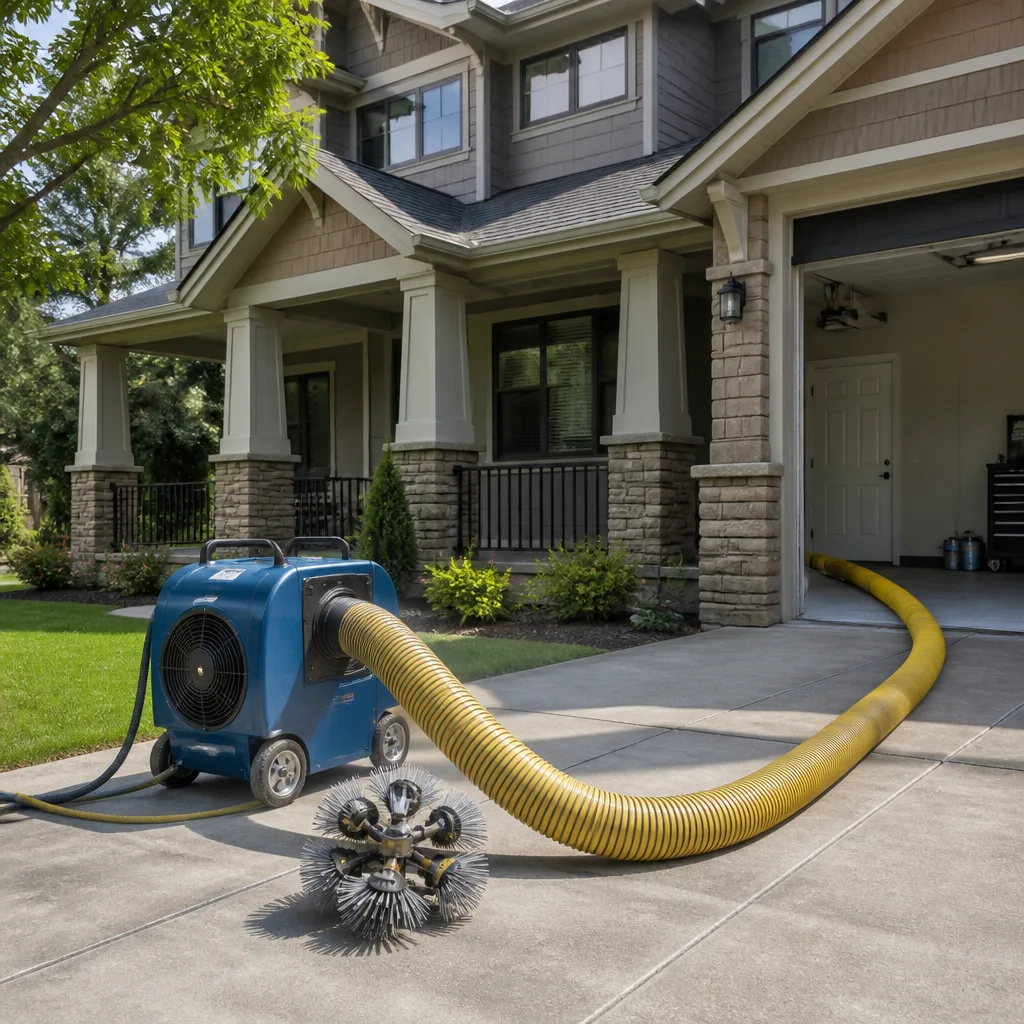 Whole-home duct cleaning
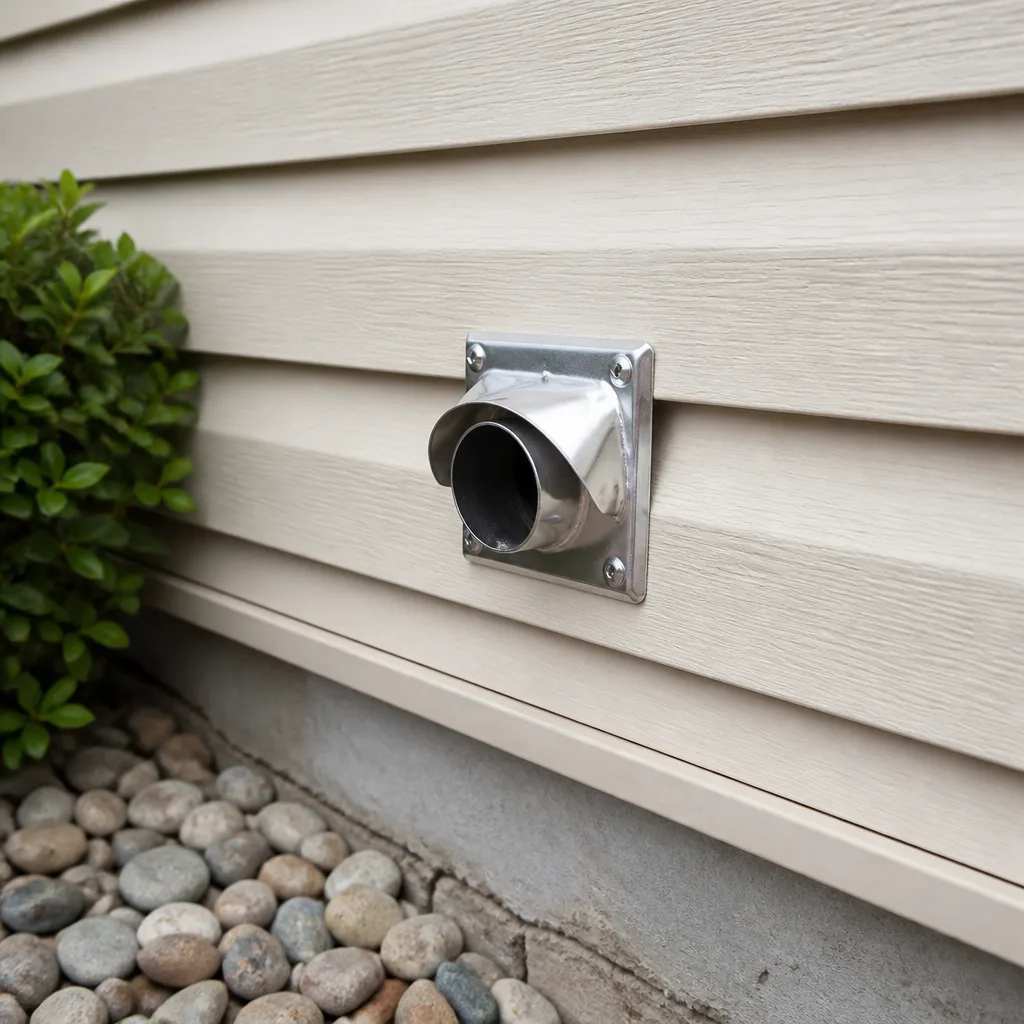 Dryer vent cleaning
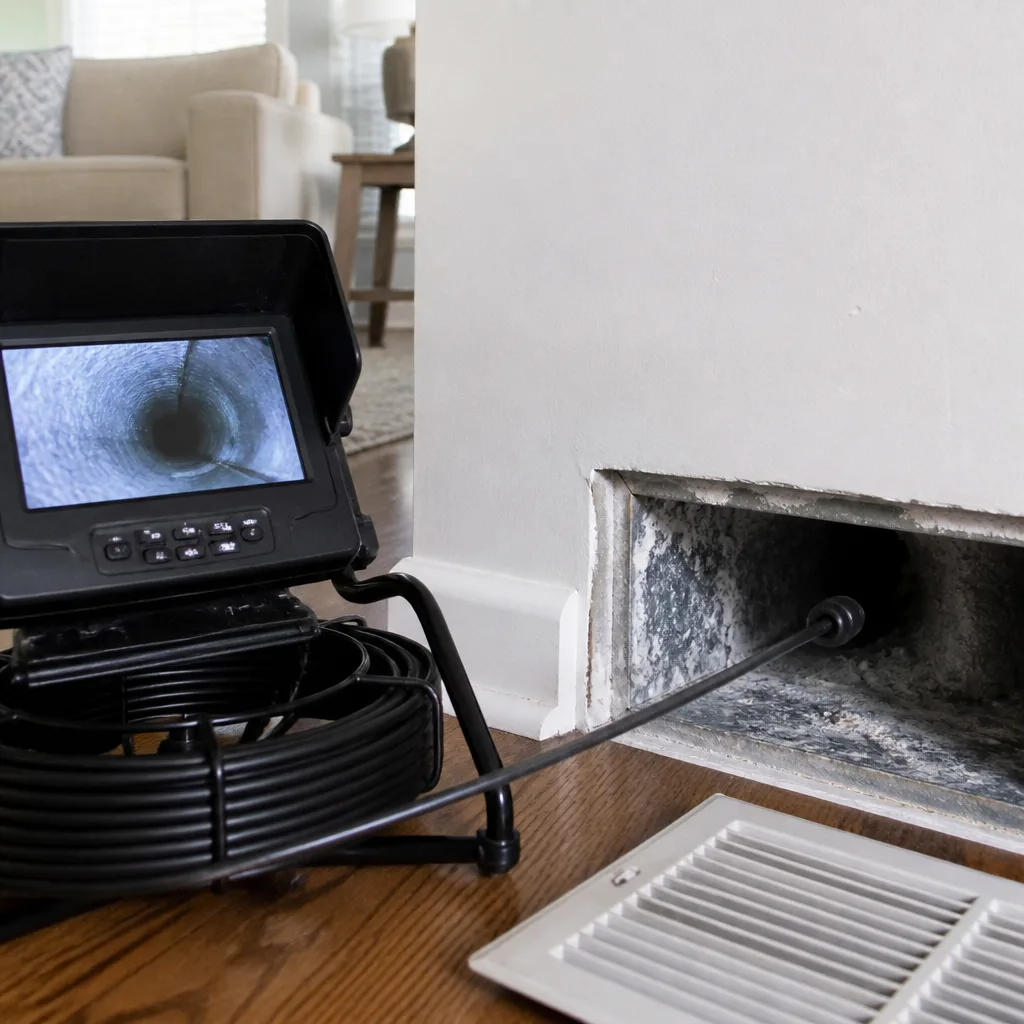 Camera inspection
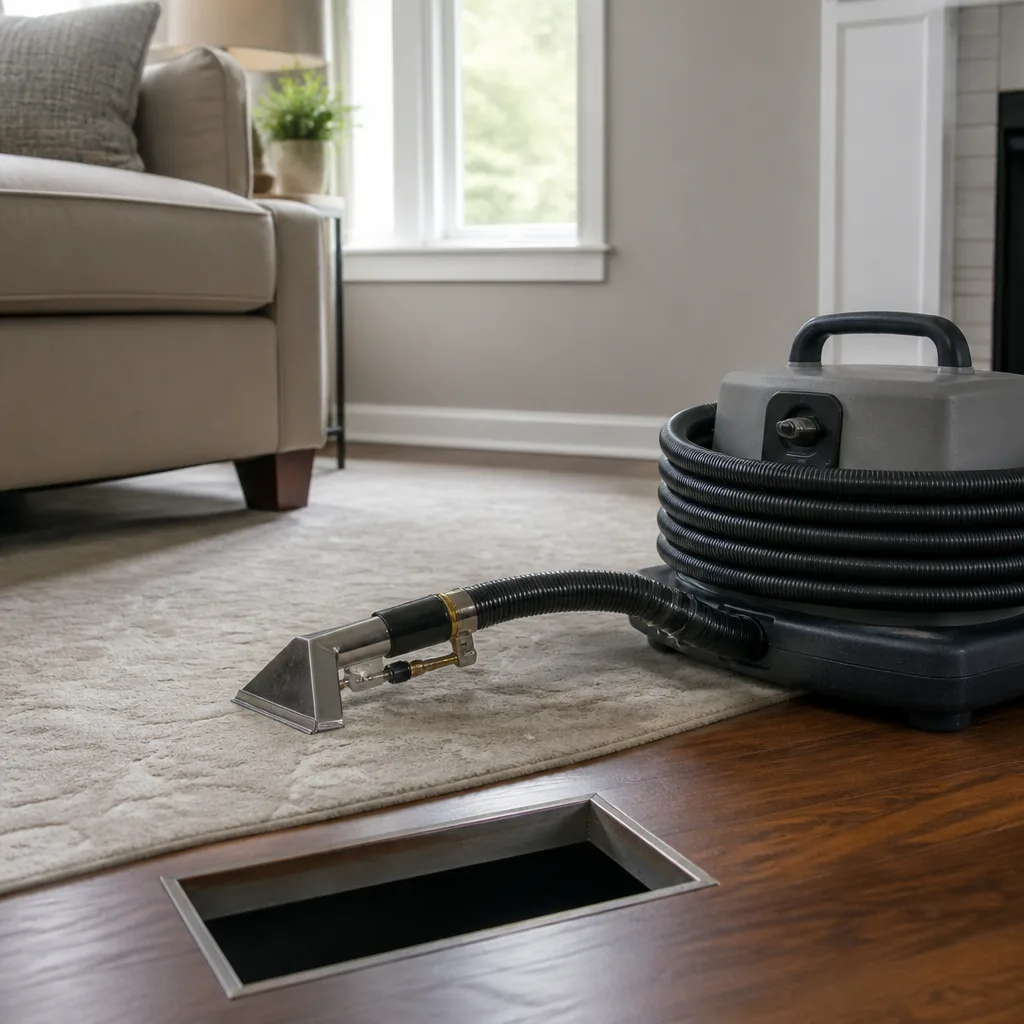 Sanitizing & deodorizing
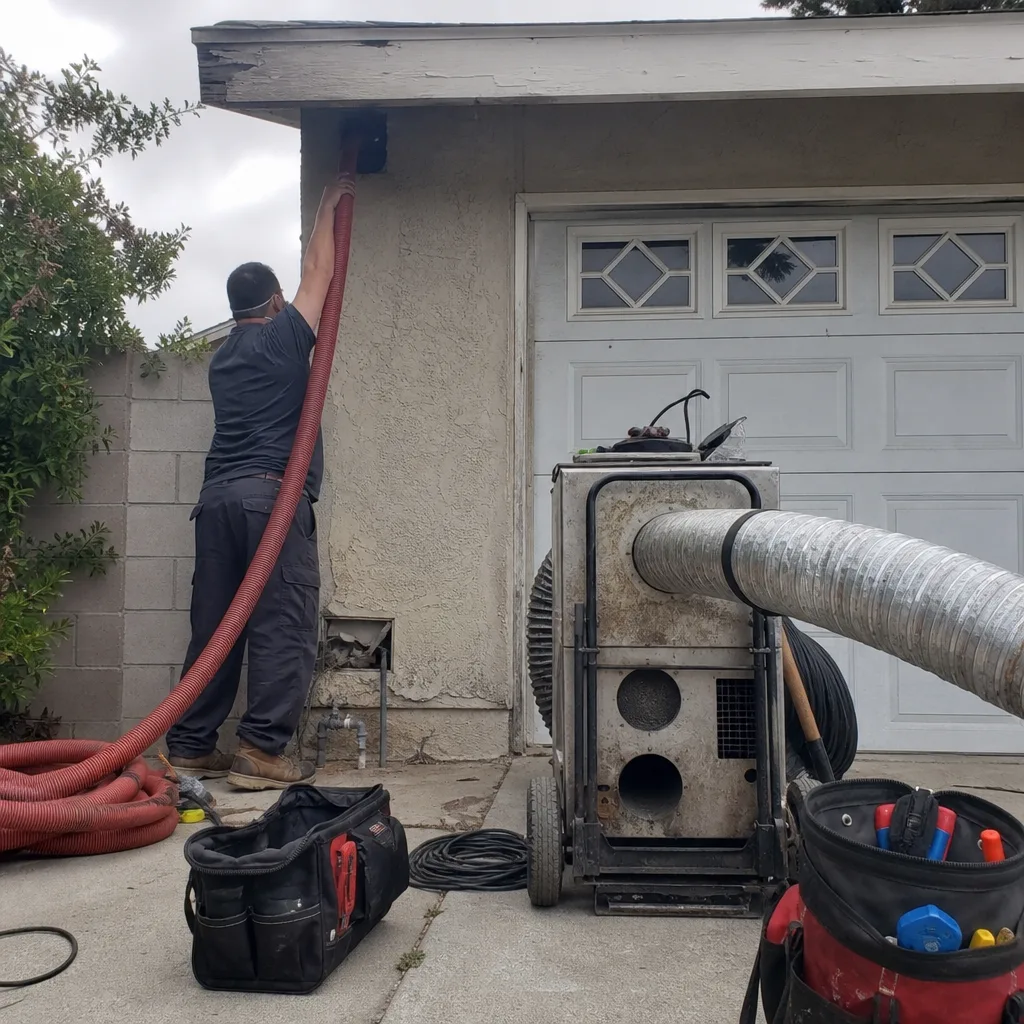
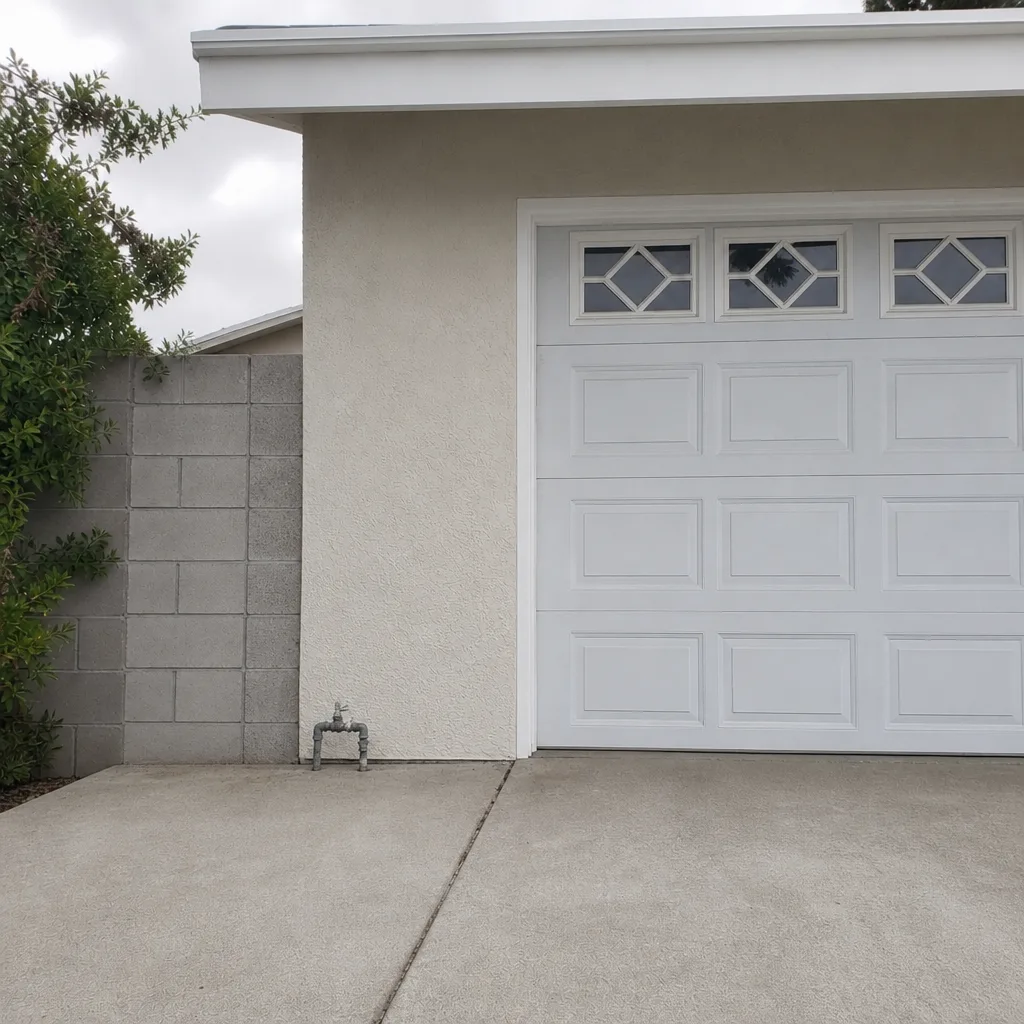
Whole-system duct and dryer vent check with before-and-after photos - you see exactly what came out of your vents
That "$99 whole-house special" is a bait ad - the real number appears once they are in your hallway, or the "clean" is a shop-vac at the register. We photograph the inside of your ducts before and after instead.
The Complete Guide to Air Duct Cleaning in Chatsworth
Most duct cleaning guides read like they were written for a hypothetical house in a hypothetical climate. They tell you dust exists, explain that filters catch some of it, and leave it at that. But a Chatsworth home has to contend with a specific set of conditions: seasonal Santa Ana wind events forcing fine particulate matter through return-air intakes, construction dust from the San Fernando Valley’s constant redevelopment, and inversion layers that can hold airborne particulates over the Valley for days at a stretch. This guide maps the actual cleaning process to those local realities, so you understand what a specialist is looking for, what the equipment does, and why a generic cleaning rarely addresses what’s actually inside a Chatsworth duct system.
Quick Answer
Air duct cleaning in Chatsworth means using a negative-air machine and rotating brush system to physically remove debris from the entire HVAC duct network, not just vacuuming what’s visible at the register. The process typically takes 3 to 5 hours for a standard single-family home, and is worth doing when ducts show visible dust accumulation, after a renovation, or when a home’s air feels heavy during Santa Ana season. A specialist uses professional-grade equipment like Duct Cleaning Chatsworth does, documented with before-and-after photos so you can verify the work was actually performed.
Styles & brands we work with
- Whole-home duct cleaning
- Dryer vent cleaning
- Camera inspection
- Sanitizing & deodorizing
Table of Contents
- Why Chatsworth Ducts Get Dirtier Than Most
- What Source Removal Actually Means
- How the Cleaning Process Works: Step by Step
- What Does Air Duct Cleaning Cost in Chatsworth?
- Older Tract Homes and Return Duct Challenges
- Dryer Vents and Cross-Contamination Risk
- What a Technician Should Document Before and After
- Common Mistakes to Avoid When Hiring
- When to Call a Professional
- Frequently Asked Questions
Key Takeaways
- Chatsworth’s Santa Ana winds and Valley inversion layers create duct contamination patterns that differ from coastal or inland desert homes.
- Source-removal cleaning, using a negative-air machine and brush system, is the only method that removes debris from the entire duct network rather than just the first few feet of each register.
- Rotobrush and Nikro systems, the same equipment remediation pros rely on, are what separates a specialist from a blow-and-go contractor.
- Older Chatsworth tract homes often have undersized return ducts that require slower, more deliberate cleaning protocols.
- A legitimate cleaner documents before and after: photos, airflow readings, and filter condition, all shared with you.
- Dryer vents positioned near main duct runs, common in Chatsworth ranch-style floor plans, create cross-contamination risk that routine cleaning should address.
Why Chatsworth Ducts Get Dirtier Than Most
Chatsworth sits at the northwest edge of the San Fernando Valley, with the Simi Hills rising to the north and the Santa Susana Mountains to the west. That geography creates a natural bowl. Air that moves through the Valley often lingers, especially during temperature inversions that trap particulates close to the ground. What that means for your ducts is simple: whatever enters your home’s air tends to stay there, cycling through the HVAC system again and again.
The Santa Ana winds add another layer. These seasonal events, typically strongest between September and February, can push fine dust, pollen, and particulate matter from the open hillsides down through the Valley. For homes with return-air intakes that draw from the exterior or from an unconditioned garage, that windborne material is forced directly into the system. Inside a trunk line, this looks like a fine, gray-brown coating on the bottom surface, heaviest at fittings and bends where the air changes direction. It accumulates quietly, often for years, because it’s finer than the lint and hair that homeowners expect to see.
Construction dust compounds the issue. Chatsworth has seen steady redevelopment, with tear-downs and additions happening throughout the Valley corridor. Even if your street hasn’t had a project yet, the prevailing winds carry demolition and concrete-cutting dust across surprising distances. This silica-heavy dust behaves differently than the organic material in typical household dust: it’s finer, heavier, and more abrasive to duct surfaces. When a cleaning crew opens a system that’s been breathing renovation air, the difference in the debris is immediately visible. That’s why we think about duct contamination in terms of specific sources, not just generic household dirt.
What Source Removal Actually Means
There are two basic approaches to duct cleaning, and they are not remotely equal. One is the “blow-and-go” method: a contractor inserts a vacuum hose into the main trunk line, maybe runs a basic brush through the first few registers, and calls it done. The equipment is often a large shop vacuum or a small, truck-mounted unit never designed for full-system extraction. Most of the buildup stays in place, particularly in the branch lines that run to individual rooms.
The other approach, source removal, is the method any serious indoor air quality specialist uses. It relies on a negative-air machine, which creates powerful suction that pulls air backward through the entire duct system while a rotating brush system agitates the interior surfaces. The debris is loosened and drawn toward the vacuum in a controlled flow, never blown into the home. The process treats the entire network: return boots, branch lines, trunk lines, plenums, and the blower cabinet itself.
What should homeowners look for? The equipment. Professional platforms like Rotobrush and Nikro are built for this specific task, with sealed filtration systems that capture fine particulates rather than releasing them back into the living space. These are the same platforms referenced in NADCA-aligned protocols for commercial and remediation settings. A contractor showing up with a shop vac and a drill attachment is not performing source removal. A specialist running a Rotobrush or Nikro system is. The tool gap is the clearest signal of what kind of service you’re actually getting.
How the Cleaning Process Works: Step by Step
Understanding the sequence helps you evaluate any quote you receive. Here’s what a complete source-removal cleaning looks like in a typical Chatsworth single-family home:
- System inspection: The technician examines every accessible component: furnace or air handler, blower motor, coils if visible, supply and return plenums, and all accessible registers. This is also when return duct size and configuration get noted, which matters in older tract homes and will come up again later.
- Filter and airflow baseline: The existing filter is checked and its condition documented. Airflow at each register is measured with an anemometer or similar tool to establish a pre-cleaning baseline. This gives an objective number to compare against after the work is done.
- Access points created: In most systems, the technician cuts small access holes in the trunk line, typically 6 to 8 inches in diameter, for the vacuum hose and agitation tools. These are sealed with removable caps afterward, not patched over, so future cleanings remain possible.
- Negative-air machine connected: The vacuum unit is hooked to the main trunk line, creating continuous suction that draws air through the entire system toward the collection point. This is the key difference from blow-and-go work: the debris is trapped, not pushed around.
- Brush agitation run through every line: A rotating brush system, either pneumatic or cable-driven, runs through each supply branch from the register back to the trunk. The brush loosens the bonded dust while the negative air pulls it away. This step is repeated for all supply runs, the return lines, and the trunk sections themselves.
- Component cleaning: The blower, blower cabinet, and accessible coil surfaces are cleaned using compressed air and HEPA-filtered vacuum tools. Simply flushing the ducts while leaving a dirty blower means recontamination within weeks.
- Post-cleaning verification: Airflow readings at each register are compared to the baseline. The access holes are capped. A visual inspection, using a camera scope where possible, confirms the branch lines are free of visible buildup.
- Documentation delivered: You should receive before-and-after photos, ideally from inside the ductwork itself, not just the registers. Filter condition before and after should also be documented. This is your proof the work was real.
The entire process takes three to five hours for a standard 1,500 to 2,500 square foot home. If a contractor tells you they’ll be done in 45 minutes, they’re skipping steps. No legitimate source-removal cleaning moves that fast.
What Does Air Duct Cleaning Cost in Chatsworth?
Air duct cleaning in Chatsworth typically runs between $450 and $900 for a complete source-removal cleaning of a single-family home, depending on the number of systems, the size of the house, and the accessibility of the ductwork. Larger homes with multiple HVAC systems, or homes with heavily contaminated ducts, can exceed that range. The estimate should always be in writing before work begins, and it should specify exactly what’s included: the number of supply and return lines, component cleaning, and any access-hole sealing.
Typical pricing structures in the Valley market look like this:
- Single-system home (up to roughly 2,000 sq ft): $450 – $650
- Two-system home or homes over 2,500 sq ft: $650 – $900
- Dryer vent cleaning as a standalone service: $120 – $250, depending on vent length and roof access
- Air duct repair work: priced by the job after inspection; small section replacement and resealing typically starts in the low hundreds
These numbers are typical estimates, not quotes. The written estimate sets the final price, and a specialist should be able to explain exactly what’s driving the number on your specific home. What matters more than the dollar figure is the pricing structure itself. A legitimate cleaner charges one flat price per system, agreed before work starts. Any quote that’s built around per-vent pricing, or that starts with a low number and grows once the technician is on-site, is a bait-and-switch in progress. Ask directly: “Is this the total price for the whole system?” If the answer isn’t a simple yes, keep looking.
Older Tract Homes and Return Duct Challenges
Chatsworth has a substantial stock of tract homes built between the 1960s and the early 1980s, many on slab foundations with horizontal HVAC systems. These homes present a specific challenge: the return-air ducting is often undersized by modern standards. Builders commonly installed a single large return, or two modest ones, for an entire house. That means the return side of the system runs at higher static pressure than the supply side, which changes how debris accumulates.
In a system with adequate return capacity, dust tends to settle fairly evenly, with the heaviest buildup at fittings. In an undersized return, the velocity through that duct is higher, and the dust that does settle gets packed into the duct walls and at the transitions. It bonds over time, requiring slower brush passes and sometimes an additional agitation step to fully remove. A technician who doesn’t recognize this will run the brush at standard speed, leave the packed layer in place, and move on. The homeowner sees a clean-looking register boot and assumes the job was done.
This is also where repair work often becomes relevant. Those older systems frequently show gaps at the plenum connections, failed tape at the joints, or sections that have separated entirely. Clean ducts are the start – sealed, repaired ducts are the finish. A specialist who offers air duct cleaning plus duct repair can address the compromised sections during the same visit, saving you from hiring a second contractor to fix what the cleaning revealed. If you don’t have a repair option, you’re getting half the picture.
Dryer Vents and Cross-Contamination Risk
Ranch-style floor plans, the dominant housing type in Chatsworth’s older neighborhoods, often place the laundry room near the central hallway or in a garage-adjacent utility alcove. That puts the dryer vent run in close physical proximity to the main return-air ducting. It’s a layout decision that made sense in the 1970s, but it creates a specific vulnerability: cross-contamination between the dryer exhaust and the HVAC system.
The mechanics are straightforward. A dryer vent accumulates lint, and when the duct is partially clogged, the exhaust pressure drops and the moist, lint-laden air escapes at the seams and joints. In a tight utility space with a return grille nearby, that lint gets drawn straight into the return-air stream and circulated through the house. The result is fine fibrous material coating the coils and clogging the filter well before its rated life. Homeowners often notice the symptom first: the dryer is taking too long to dry loads. What they don’t see is the HVAC filter turning gray at the edges, or the fine lint building up on the blower wheel.
Dryer vents are a fire hazard, not a convenience issue. Lint is highly combustible, and a restricted vent allows heat to build at the transitions and elbows where the material collects. Dryer vent cleaning is best treated as its own safety service with dedicated protocols: removing the lint from the entire run, checking the termination damper, and verifying airflow at the exterior outlet. When a duct cleaning appointment includes a dryer vent assessment, it’s not an upsell. It’s a technician recognizing that the two systems in your home are connected in ways that matter.
What a Technician Should Document Before and After
The duct cleaning industry has a documentation problem. A homeowner can watch a technician work for three hours and still have no way to verify what actually happened inside the lines they can’t see. That’s why proof of work, not a verbal sign-off, should be the standard. Here’s what a legitimate specialist provides:
- Before-and-after photos from inside the ductwork: Not pictures of the register before and after. Actual scope images from inside the trunk line and branch runs, showing the interior surface before cleaning and again after. You should be able to see the difference yourself.
- Airflow readings at each register: A baseline measurement before the work begins, and a comparison reading after. Restricted airflow that improved after cleaning is objective evidence the system was actually cleared.
- Filter condition documentation: A photo of the filter before and after, noting the replacement date if a new one was installed. This also tells you how quickly the cleaned system is re-accumulating material, which is diagnostic information in itself.
- Access hole locations: A diagram or photo showing where the technician cut access points and how they were sealed. This matters for future maintenance and for verifying the work if you ever sell the home.
- Notes on any findings: Loose connections, damaged sections, evidence of moisture, debris type observed. You should know if the system was dirty in a specific way that suggests a source issue, like a gap pulling attic dust.
Before-and-after photos of their own ducts are the single strongest verification tool a homeowner has. If a contractor can’t or won’t produce them, the work hasn’t been proven. Ask for it before you book, not after.
Common Mistakes to Avoid When Hiring
- Taking a per-vent price as the real quote. Any contractor who prices by the vent, or who quotes a low “whole house” number and then adds on for “extra” vents, is running a pricing game. A legitimate quote is one flat price per system. If the structure feels gamed, it probably is.
- Assuming a shop vac is a tool. A large vacuum is not source-removal equipment. If the truck carries a big canister vacuum and some brushes, you’re paying for the appearance of service, not the service itself. Professional platforms like Rotobrush and Nikro exist for a reason: ductwork requires negative-air extraction with sealed filtration.
- Skipping the repair conversation. A cleaning reveals what’s already wrong with the system: gaps, separated joints, crushed sections. If your cleaner can’t offer air duct cleaning plus repair, you’ll be hiring someone else to finish the job. In older Chatsworth homes, that’s common enough to plan for.
- Treating the dryer vent as an afterthought. Dryer vent cleaning is a fire-safety service, not a convenience add-on. In ranch floor plans where the vent runs near the return, a clogged dryer vent compromises the entire air system you just paid to clean.
- Not checking what the company actually does. A generalist HVAC company that performs duct cleaning as a side service won’t have the same equipment maturity as a specialist. Ask how many of their service calls are strictly duct and ventilation work. You want the company whose entire operation is built around this.
- Waiting until the system is visibly dirty at the registers. By the time dust is visible at the register faces, the interior of the duct is already significantly loaded. Regular inspection, particularly after Santa Ana season or any renovation work, catches accumulation before it becomes a problem for the blower and coil.
- Not checking for hidden filters. Some Chatsworth homes, especially additions and converted garages, have secondary filters or filter boxes hidden in unusual locations. A technician who assumes one filter means one filter may leave a clogged auxiliary filter in place. Ask the technician to identify every filter location before work begins.
When to Call a Professional
Schedule a duct cleaning when you see dust accumulation around the register faces that returns quickly after cleaning, when you’ve completed a renovation that produced drywall or concrete dust, when a prior owner left years of unknown maintenance history in an older home, or when the airflow from your registers feels consistently weak. These are specific, observable conditions, not generic “indoor air quality” concerns. If the home has never been cleaned since it was built, and the return ducts are original to a 1970s tract house, the system is due. Duct Cleaning Chatsworth offers free estimates in Chatsworth. Call (888) 494-4745. We answer 24/7. Fast dispatch from 7am to 7pm, Sunday through Friday.
Frequently Asked Questions
A complete source-removal cleaning in Chatsworth typically runs $450 to $900 for a single-family home, with the final price set by the written estimate based on system size and condition. Any quote built on per-vent pricing or a teaser number that grows on-site should be rejected. Call (888) 494-4745 for a specific quote on your home, and expect one flat price per system agreed before work starts.
Blow-and-go uses a vacuum at the register or a basic brush attachment without negative-air extraction, clearing the first few feet of each line and leaving the rest untouched. Source removal connects a powerful negative-air machine to the trunk line and runs a rotating brush system through every branch, drawing the loosened debris back to a sealed collection point. That’s the difference between looking clean and being clean.
You should receive before-and-after photos from inside the ductwork, airflow readings at each register before and after, and a written description of what was found and what was done. Any contractor who can’t produce internal scope images hasn’t verified their own work. What’s in your air between filter changes is a question only documentation can answer.
Because they’re describing different services. A cheap quote usually means blow-and-go work: a shop vac, a basic brush, and 45 minutes of labor. A legitimate source-removal cleaning takes hours, uses professional equipment that costs tens of thousands of dollars, and produces documentation. You’re not paying for the same thing.
Most Chatsworth homes benefit from a full cleaning every 3 to 5 years, with more frequent service if the home is near active construction, experiences heavy Santa Ana seasons, or has residents with significant allergy concerns. The answer isn’t annual cleaning as a routine; it’s based on what’s actually entering the system, which varies block to block in the Valley.
Yes, and the protocols matter. Homes built in the 1960s through 1980s often have undersized return ducts that pack dust more tightly and require slower, more deliberate brush work. A specialist who works on these systems regularly in Chatsworth will recognize the difference and adjust the cleaning approach accordingly. Clean ducts are the start – sealed, repaired ducts are the finish. The same visit can address both.
The Bottom Line
Duct cleaning in Chatsworth is a local problem with local answers. The Santa Ana winds, Valley inversion layers, construction dust from ongoing redevelopment, and aging tract-home ductwork all shape what accumulates in your system and how it should be removed. A legitimate service uses negative-air source removal with professional equipment, documents the work in a way you can verify, and treats the dryer vent as part of the same indoor air picture. The lowest bid usually describes the least amount of work. When you’re ready to see what’s actually inside your ducts, call (888) 494-4745 for a free estimate in Chatsworth. We answer 24/7. Fast dispatch from 7am to 7pm, Sunday through Friday.
Written by the team at Duct Cleaning Chatsworth, serving Chatsworth since 2017.
See the difference
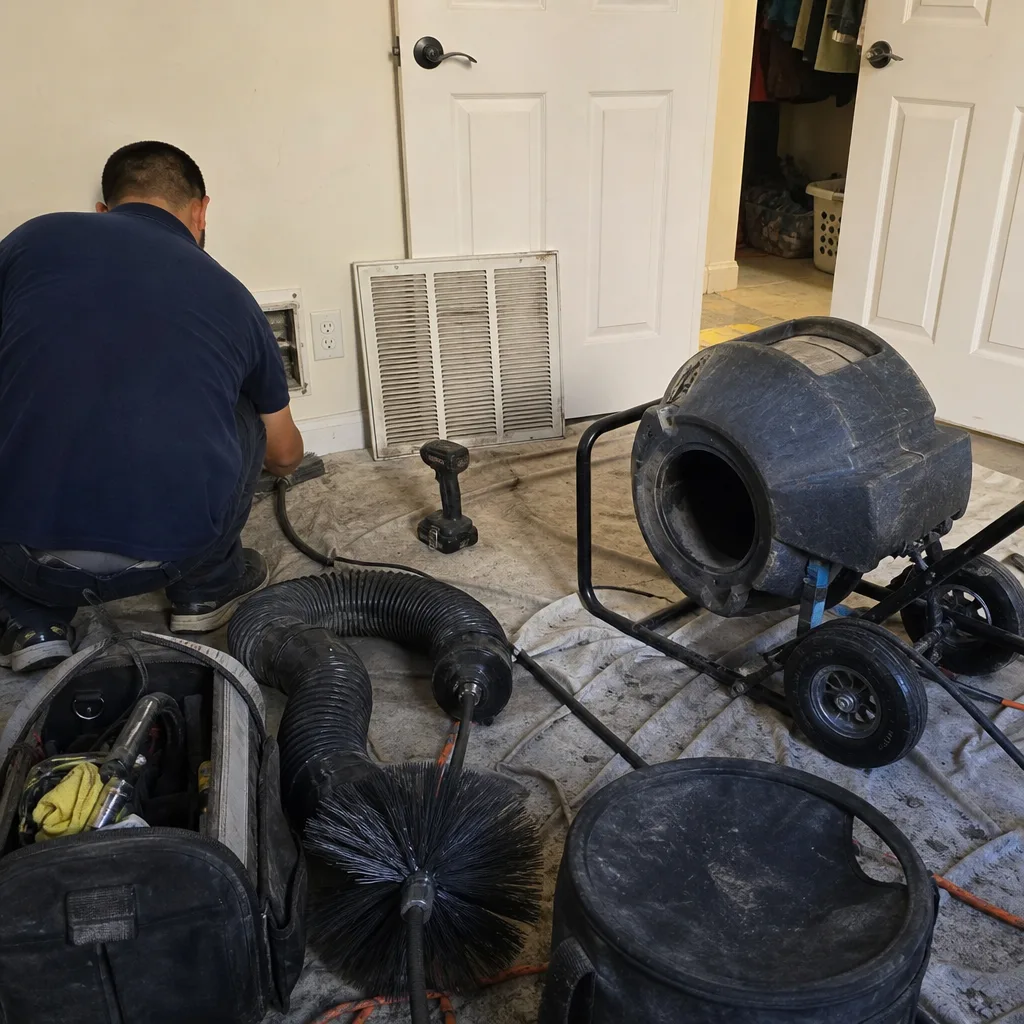 Before
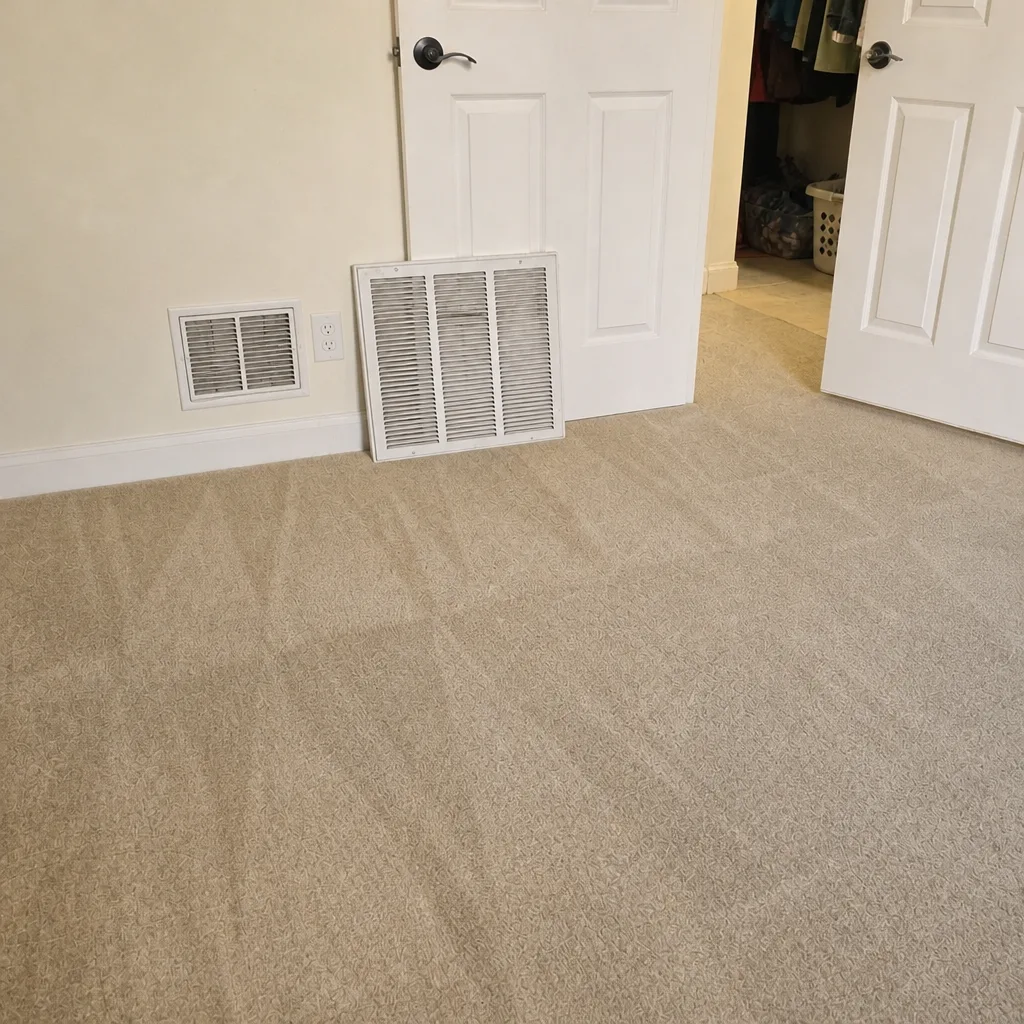 After
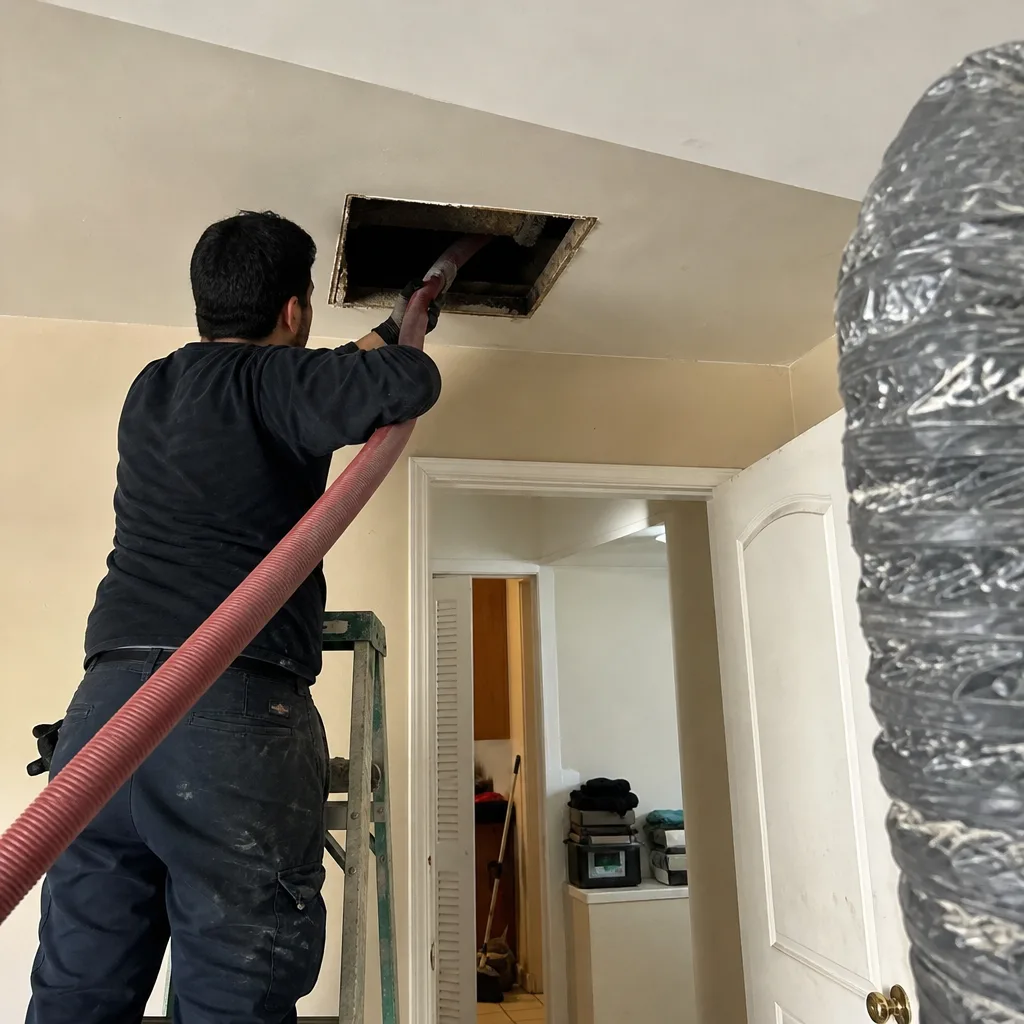 Before
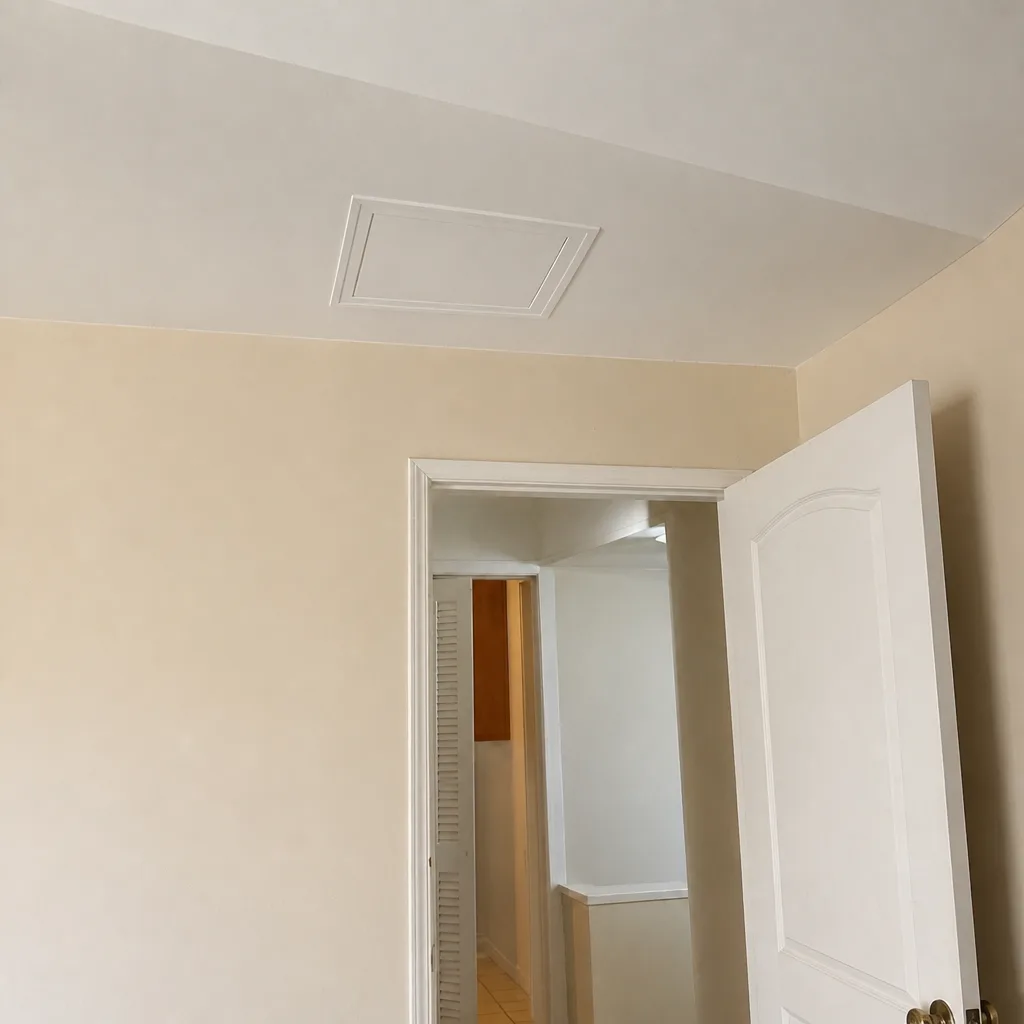 After
 Before
 After