
Last updated November 4, 2026
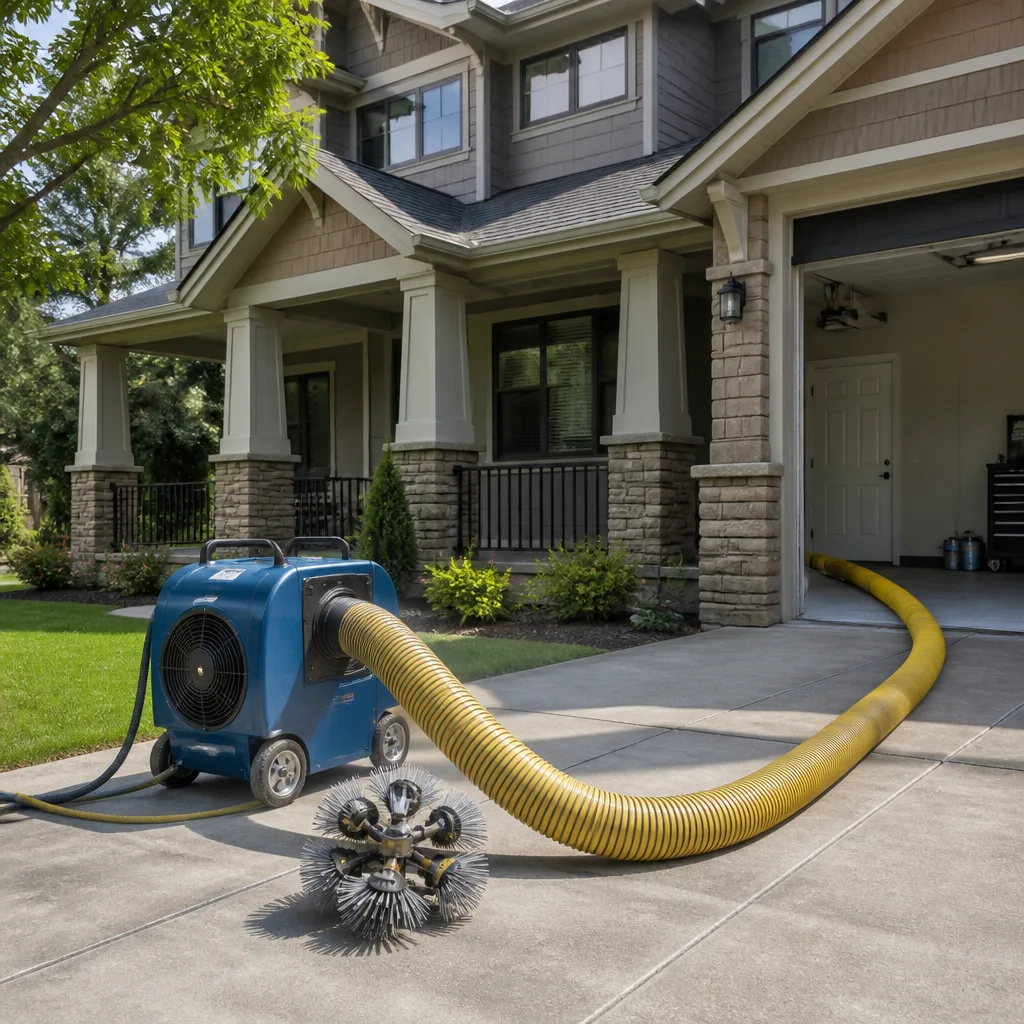 Whole-home duct cleaning
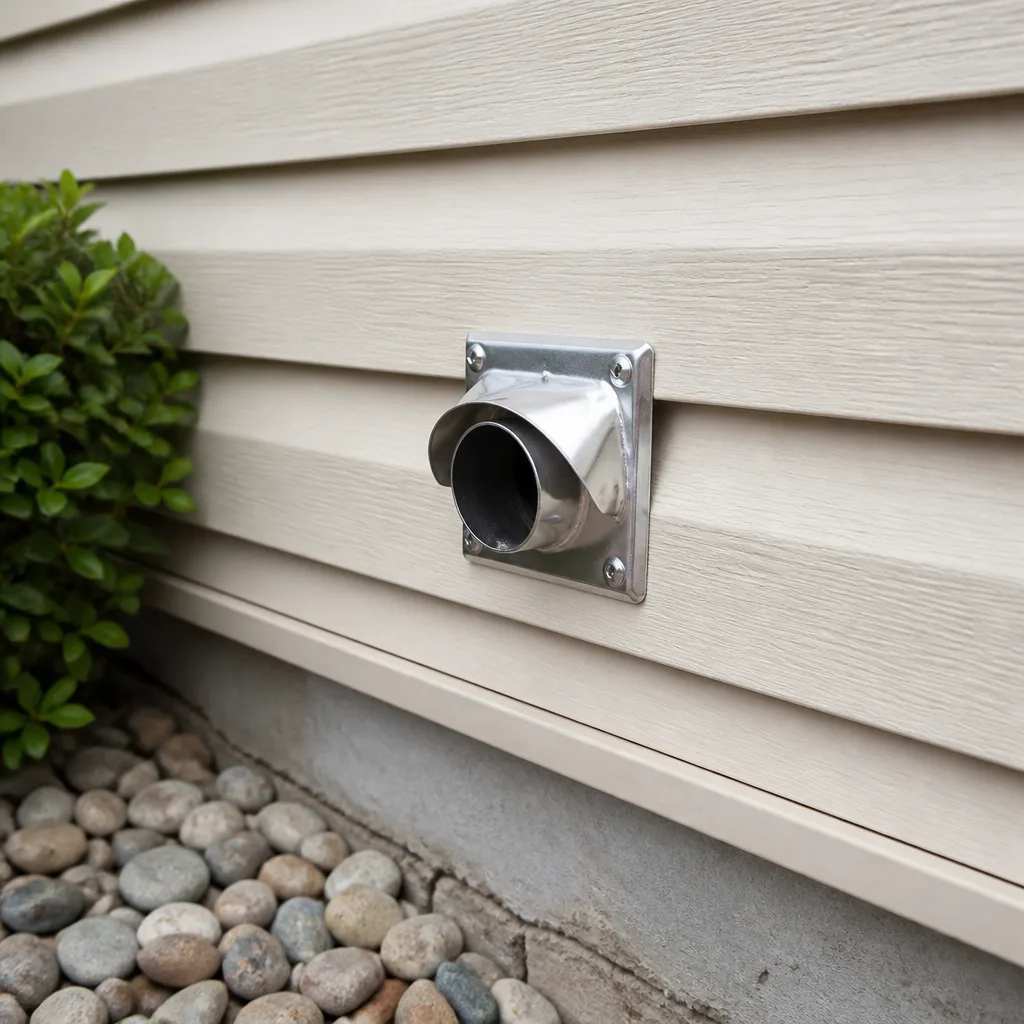 Dryer vent cleaning
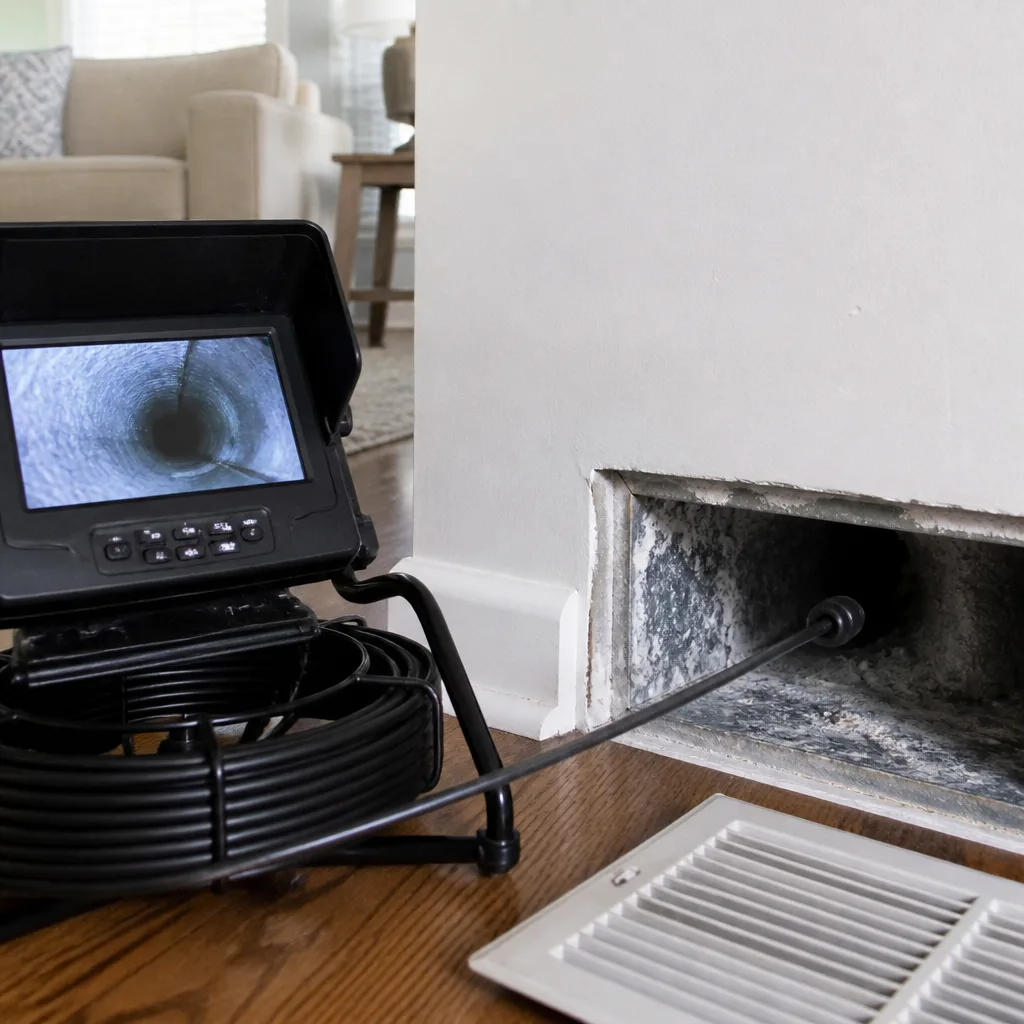 Camera inspection
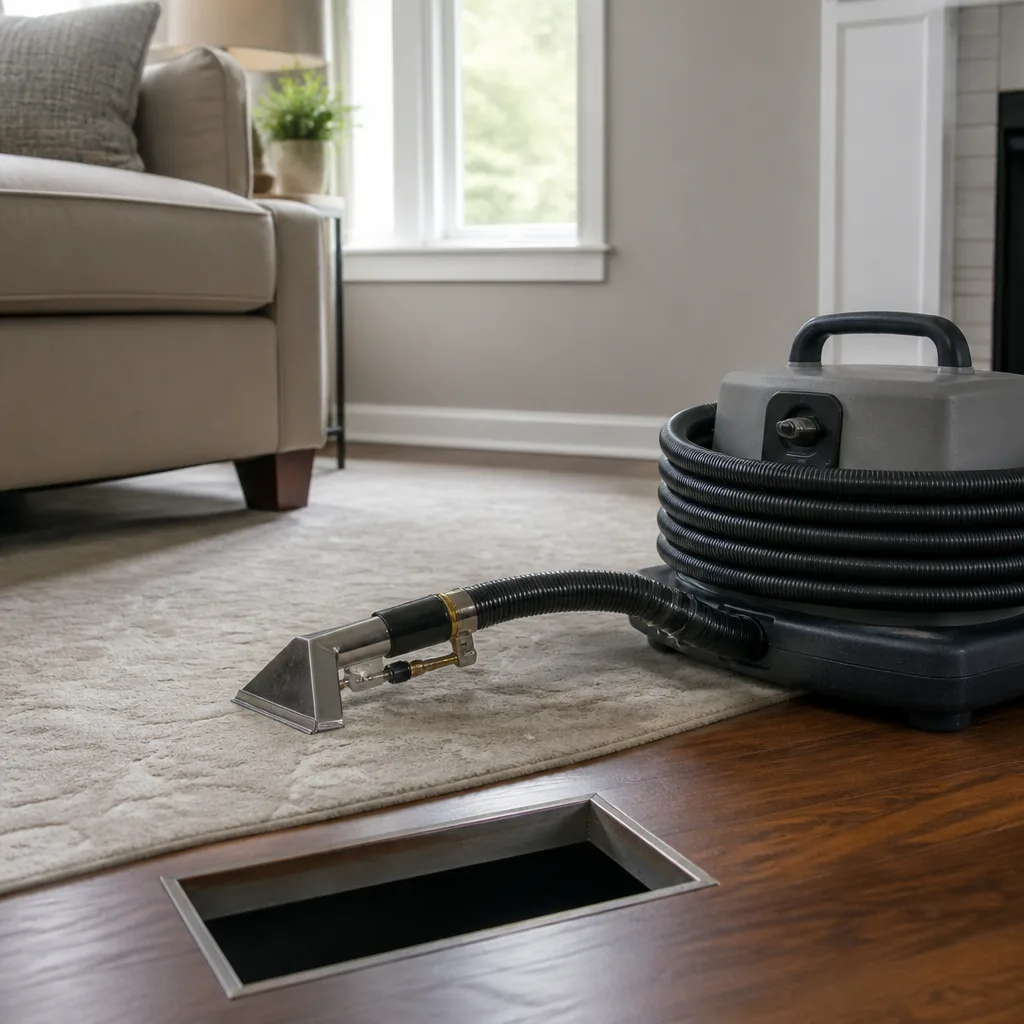 Sanitizing & deodorizing
Whole-system duct and dryer vent check with before-and-after photos - you see exactly what came out of your vents
That "$99 whole-house special" is a bait ad - the real number appears once they are in your hallway, or the "clean" is a shop-vac at the register. We photograph the inside of your ducts before and after instead.
How to Hire an Air Duct Cleaning Contractor in Chatsworth: A Step-by-Step Guide
A $49 whole-house duct cleaning offer isn’t a deal. It’s the opening move in an upsell script that the California Attorney General’s office has cited in consumer protection advisories. The duct cleaning industry in greater Los Angeles has a documented pattern of lowball coupons, door-to-door upselling, and vague “sanitizer” add-ons, and Chatsworth homeowners are regularly targeted because of the area’s high proportion of owner-occupied single-family homes and neighborhoods where residents tend to stay put for years. This guide gives you a contractor interview and verification sequence that filters out bad actors before work starts. You’ll learn which three documents to request, what a legitimate walkthrough includes, how to read a written quote line by line, and which questions separate a dedicated indoor-air-quality specialist from an HVAC generalist running duct cleaning as a loss leader.
Quick Answer
To hire an air duct cleaning contractor in Chatsworth, verify three documents before any technician enters your home: a CSLB contractor license number, a general liability certificate, and workers’ comp coverage. Then require a pre-job walkthrough that counts registers, identifies duct material, and plans access points. Finally, demand a written quote with line items for equipment type, method, and the number of supply versus return lines, and confirm the company provides before-and-after photo documentation of your actual ducts. You want a dedicated IAQ specialist with professional-grade equipment like Rotobrush or Nikro systems, not a generalist running a coupon special.
Styles & brands we work with
- Whole-home duct cleaning
- Dryer vent cleaning
- Camera inspection
- Sanitizing & deodorizing
Table of Contents
- The Three Documents to Request Before Any Technician Enters Your Home
- What a Legitimate Pre-Job Walkthrough Includes
- How to Read a Written Quote: Line Items That Should Be There and Red Flags
- Questions That Reveal a Dedicated IAQ Specialist vs. an HVAC Generalist
- How to Verify Before-and-After Documentation Standards
- The Equipment Gap: Professional-Grade vs. Big-Box Vacuums
- Chatsworth-Specific Considerations for Duct Cleaning
- What a Proper Duct Cleaning Process Looks Like
The Three Documents to Request Before Any Technician Enters Your Home
This is the first filter, and it eliminates most bad actors in minutes. Any legitimate duct cleaning contractor working in Chatsworth should be able to produce these three documents without hesitation. A company that stalls, changes the subject, or says they’ll “bring it to the job” has already failed the test.
- CSLB contractor number. The California State License Board requires any contractor performing work over $500 in labor and materials to hold a current license. Duct cleaning typically falls under a C20 warm-air heating, ventilating and air-conditioning contractor classification, or a general building contractor classification depending on the scope. Ask for the number, then verify it on the CSLB website. A legitimate company will have the number printed on their truck, their estimate forms, and their business cards. You’re not being difficult by asking, you’re doing exactly what the CSLB recommends.
- General liability certificate. This covers your property if the contractor damages your drywall, tears a register boot, or causes damage while accessing your ductwork. The certificate should list you as the certificate holder and come directly from the insurance carrier or a licensed agent. It should be current, not one from three years ago.
- Workers’ comp coverage. If the contractor sends an uninsured worker into your home and that worker gets hurt, you could be named in the claim. Any contractor with employees in California must carry workers’ compensation insurance. A sole proprietor with no employees may be exempt, but they should still be able to explain their status clearly and provide a written statement to that effect.
Requesting these three items is not a burden on a professional company. It’s the equivalent of asking a restaurant for a health inspection score. The good ones are proud of it, the bad ones get defensive. We’ve had Chatsworth homeowners tell us they’ve asked lowball coupon companies for a CSLB number and been told “it’s in the truck,” only to never hear from the company again. That’s the system working.
What a Legitimate Pre-Job Walkthrough Includes
A proper pre-job walkthrough takes 20 to 30 minutes, not five. If a contractor quotes you a duct cleaning price over the phone without ever seeing the house, treat that number as meaningless. A legitimate quote requires a physical inspection, and here’s what should happen during it.
Register count. The contractor should count every supply register and return grille in the home. This matters because the number of access points and the time required scale with register count, not square footage. A Chatsworth home with 12 registers and one return is a different job than a home with 8 registers and two returns, and the quote should reflect that difference.
Duct material identification. The contractor should identify whether your ducts are sheet metal, flex duct, or fiberglass duct board, because each requires different cleaning methods and different care. Flex duct can tear if the wrong agitation method is used. Fiberglass duct board should never be aggressively scrubbed because you’ll release glass fibers into the airstream. A contractor who doesn’t ask what your ducts are made of is a contractor who plans to treat every house the same, and that’s a red flag.
System age and configuration. The walkthrough should include a look at the furnace or air handler, the filter housing, and the general condition of the system. An older system with a fiberboard plenum or a clogged evaporator coil tells the contractor something about what’s in the ducts. If the tech doesn’t open the filter housing or look at the air handler, they’re not doing a real assessment.
Access point planning. Before the contractor leaves, they should tell you where they’ll access the duct system. In most Chatsworth homes, that means cutting temporary access into the supply plenum near the furnace or using existing register openings. If they can’t tell you where they’ll be working, they haven’t thought through the actual job.
If a “contractor” comes to your door in Chatsworth offering a free quote and completes their “walkthrough” in under five minutes, you’re not getting an estimate. You’re getting a coupon pitch. The walkthrough is the contractor’s first opportunity to show they understand your specific system, and it tells you more about their competence than any sales script ever will.
How to Read a Written Quote: Line Items That Should Be There and Red Flags
Most homeowners in Chatsworth never actually read a duct cleaning quote closely. They look at the bottom number, maybe ask one or two questions, and make a decision. That’s exactly what the bad actors are counting on. Here’s how to read a quote like a building inspector would.
Line Items That Should Be There
- Equipment type. The quote should name the specific equipment that will be used. If you see “Rotobrush system” or “Nikro negative air machine” on the quote, that’s a good sign. It means the company has committed to a specific tool set and you can hold them to it. Professional-grade equipment, not shop-vac shortcuts.
- Method description. The quote should say whether they’re doing source removal, which is the industry standard, and should mention negative air pressure. Push-only cleaning, where the tech just shoves a brush into the ducts without pulling the dislodged debris out, is not a complete job. The quote should say something like “negative air collection with rotary brush agitation” or similar language.
- Number of supply vs. return lines. Your supply ducts push conditioned air into rooms. Your return ducts pull air back to the furnace. They’re both part of the system, but a complete cleaning includes both. If the quote only says “up to 10 vents,” that’s not a real scope description. It should specify how many supply registers, how many return grilles, and how many main trunk lines are included.
- Access creation and sealing. The quote should state that any temporary access points cut into the plenum will be sealed with metal patches, not duct tape. Duct tape doesn’t belong on ducts. A legitimate quote will say something about “temporary access, sealed with removable metal covers” or similar.
- Filter replacement or cleaning. At minimum, the contractor should note the condition of your filter and whether replacement is recommended. They don’t need to sell you a filter, but a contractor who never mentions your filter wasn’t paying attention.
Red Flags That Should Make You Walk Away
- Flat-rate pricing with no scope detail. A quote that says “whole house duct cleaning: $249” with no register count, no material identification, and no method description is not a quote. It’s a marketing number designed to get a tech in the door, and the real price will appear after the “inspection” reveals “mold,” “vermin,” or any number of other made-up problems.
- Charging by the square foot of your home. Duct cleaning cost should be based on the duct system, not the square footage of the house. A 3,000 square foot Chatsworth home with 10 registers is a smaller duct cleaning job than a 1,800 square foot home with 18 registers. Square-foot pricing is a sign the company doesn’t understand the work.
- “Sanitizer” as a mandatory add-on. If the quote includes a mandatory sanitizing treatment or fogging service, ask exactly what chemical is being used, why it’s necessary, and what it’s supposed to do. The California Attorney General’s consumer protection division has flagged aggressive sanitizer upsells as a common duct cleaning scam pattern. Sanitizing ductwork is rarely necessary in a Chatsworth home, and it’s never something you should feel pressured into.
- A price that’s less than a carpet cleaning. A legitimate whole-house duct cleaning with professional-grade equipment takes hours and involves real labor, real equipment, and real insurance. If someone is offering to do it for less than the cost of a carpet cleaning, the math doesn’t work. The only way to make that price work is to do a partial job, or to get in the door and upsell aggressively.
Read the scope, not just the number. A legitimate quote from a professional duct cleaning company in Chatsworth will look like a bid for any other trade: specific, detailed, and boring. That’s what you want.
Questions That Reveal a Dedicated IAQ Specialist vs. an HVAC Generalist
Duct cleaning is a strange niche because it’s offered by all kinds of companies: generalist HVAC contractors, carpet cleaning franchises, handyman services, and dedicated indoor-air-quality specialists. You want the specialist, and the way to find them is to ask questions that force the generalists to reveal themselves.
Question 1: “What equipment do you use for agitation and collection?”
This is the single most revealing question you can ask. A dedicated IAQ specialist will answer immediately and specifically. They’ll name their equipment: a Rotobrush system, a Nikro negative air machine, an Abatement Technologies collector. They’ll talk about brush types, airflow rates, and negative pressure. A generalist will say something vague like “high-powered truck-mounted equipment,” or worse, “we have all the necessary tools.” Vague answers mean the person on the phone doesn’t actually know what equipment the techs use, which means they’re not a specialist. They’re a dispatcher for whoever answered the Craigslist ad.
Question 2: “Do you do duct repair, or just cleaning?”
This question separates the specialists from the marketers. A company that only cleans ducts is only doing half the job. Ductwork gets disconnected, crushed, and torn over the years. A Chatsworth home built in the 1970s or 1980s may have original ductwork with seams that have opened up, and cleaning is the moment when those problems become visible. A company that can identify compromised ductwork and perform Duct Cleaning Chatsworth repair work in the same visit is a company that understands the whole system. Clean ducts are the start; sealed, repaired ducts are the finish. If the answer is “no, we just clean,” that’s not a disqualifier by itself, but it means you may be hiring a second contractor later to fix what the first one finds. A dedicated duct and ventilation specialist should at least be able to assess and repair common duct issues.
Question 3: “Are dryer vents part of your service, or is that a separate thing?”
A specialist who takes dryer vents seriously treats them as a fire-safety service, not an upsell afterthought. Dryer vents are a fire hazard, not a convenience issue. Lint is the fuel, and a restricted dryer vent is the ignition risk. A company that offers dryer vent cleaning as a discrete, standalone service focused on fire prevention is signaling that they understand ventilation systems holistically. A company that mumbles “yeah, we can do that too” is treating it as an add-on. The difference matters.
Question 4: “What does your before-and-after documentation look like?”
This question separates legitimate operators from the ones who plan to show up, run a vacuum for an hour, and leave you with nothing but a receipt. A professional duct cleaning company should be able to show you before-and-after photos of the inside of your actual ducts, not stock photos, not photos of “a similar job.” We’ll cover this in more detail in the next section, but the question itself is a filter. A contractor who can’t answer it clearly is a contractor who doesn’t plan to document anything, and an undocumented duct cleaning might as well not have happened. You can’t see inside your own ducts without a camera, so the documentation is the proof.
Question 5: “Do you install or service whole-home air quality systems?”
A company familiar with Honeywell and Aprilaire product lines, the brands homeowners already recognize from thermostats and filtration systems, is thinking about long-term indoor air quality rather than a one-time visit. They understand that what’s in your air between filter changes is the real problem, and they can speak to filtration options beyond the basic one-inch furnace filter. This question doesn’t mean you have to buy anything. It reveals whether the company thinks like a maintenance partner or a one-and-done vendor.
How to Verify Before-and-After Documentation Standards
The fundamental problem with duct cleaning is that the work happens inside a system you can’t see. You can’t stand in your hallway and watch your ducts get cleaned. You can hear the equipment running, and you can see the tech’s feet sticking out of an access hole, but you cannot see the actual surface of the duct interior. That means the documentation is the product. If a contractor can’t show you what they did, they haven’t done anything you can verify.
Here’s what legitimate before-and-after documentation looks like, and what you should insist on before agreeing to any work in your Chatsworth home.
Camera Access to the Actual Ducts
The contractor should run a camera into your ductwork before cleaning starts and capture footage of the actual interior surface. This footage should show the actual condition: dust accumulation, construction debris, pet hair, whatever is actually in there. It shouldn’t be a generic photo of a dirty duct from the company’s marketing folder. Ask them to show you the live feed if possible. A company with a proper Rotobrush or inspection camera system can show you your ducts on a screen in real time.
Matching After-Shots from the Same Access Points
After cleaning is complete, the contractor should run the camera back into the same ducts from the same access points and show you the difference. The after-shots should show the same duct sections, not different ones. This is the only way to verify that the cleaning actually happened in the sections they claim to have addressed. A contractor who shows you a clean after-shot from a different duct section is not documenting, they’re performing.
Comparison Photos Delivered to You
You should receive the before-and-after photos as part of your job record, either by email or in a written report. This matters for your own records and for any future warranty or maintenance conversations. It also matters if you ever sell your Chatsworth home. A documented duct cleaning and Chatsworth air-quality history is a small piece of evidence that you maintained the property, which is something buyers and inspectors notice.
If a contractor’s documentation standard amounts to “trust us, it’s clean,” that’s not a standard. That’s an assertion. And an assertion, without evidence, is worth exactly what the $49 coupon price was worth: nothing.
The Equipment Gap: Professional-Grade vs. Big-Box Vacuums
The single biggest difference between a legitimate duct cleaning operator and a lowball competitor is sitting in their truck. You can learn everything you need to know about a company by asking one question: what’s the horsepower and airflow spec on your collection unit?
Duct cleaning is not vacuuming. A household vacuum moves a few hundred cubic feet of air per minute through a two-inch hose, and it was never designed to pull debris out of a 100-foot duct run. A professional negative air machine moves thousands of cubic feet per minute through an eight-inch or larger collection hose, creating the negative pressure that actually lifts and transports the dislodged material out of the system. The difference is not subtle. It’s the difference between a garden hose and a fire hose.
Equipment brands that appear consistently in NADCA-aligned duct cleaning protocols include Rotobrush, Nikro, and Abatement Technologies. These are industrial-grade platforms designed for source removal in residential and light-commercial duct systems, not big-box vacuums or consumer-grade gear. Rotobrush systems combine rotary brush agitation with an integrated collection unit. Nikro produces negative air machines and air sweepers used by remediation professionals. Abatement Technologies equipment is designed for environments where the duct systems may contain more than routine dust: construction debris, drywall dust, or contaminated materials. When a company lists this equipment, they’re telling you they’ve invested in the tools required to do the job properly, and that investment is a signal they’re not a weekend operation running out of a pickup truck.
Here’s a practical way to use this information. When you call a duct cleaning company in Chatsworth, ask them to name the equipment brand and model they’ll be using at your home. A real operator will answer without pausing. A company running consumer-grade equipment will deflect: “we use professional equipment,” “it’s a truck-mounted system,” or “you don’t need to worry about that.” The deflection is the answer. They can’t name the brand because the brand is a Shop-Vac.
There’s a second layer to the equipment conversation that matters for Chatsworth homeowners. Some systems are combined: the rotary brush agitates, the negative air machine collects, and the two work together as a system. A company using an agitation tool without negative air collection is just moving dust around, not removing it. A company using negative air without adequate agitation is leaving behind the debris that’s actually adhered to the duct walls. The two functions have to work together, and the quote should reference both.
What a Proper Duct Cleaning Process Looks Like
Understanding the actual process helps you evaluate whether a company knows what it’s doing. Here’s what a professional source-removal duct cleaning looks like in a typical Chatsworth home, step by step.
- System isolation and negative air setup. The technician sets up a negative air machine at the furnace or air handler. This creates sustained negative pressure in the duct system, so all cleaning debris is pulled toward the collection unit instead of being blown into your living room.
- Register removal and inspection. Supply and return registers are removed, cleaned, and inspected. The tech should look at the register boots, the interior duct surfaces near the openings, and note any damage.
- Access point creation. If the system configuration requires it, a temporary access hole is cut into the supply plenum or main trunk line. This is cleanly cut and later sealed with a proper metal patch.
- Rotary brush agitation. Using a system like Rotobrush, the technician runs a rotating brush through each supply and return line. The brush mechanically dislodges dust, hair, and debris that has adhered to the duct walls over years of operation.
- Collection and extraction. The negative air machine pulls the dislodged material out of the system and into the collection unit. This is not a filter bag that gets emptied into the garbage; the debris is captured and contained.
- Trunk line and plenum cleaning. The main supply and return trunks, as well as the plenum, are cleaned and inspected. This is where the bulk of the material usually accumulates.
- Filter inspection and recommendation. The tech checks the existing filter, notes its condition, and makes a recommendation. No pressure, just information.
- Access point sealing and system check. The access point is sealed with a metal patch, registers are reinstalled, and the system is checked for proper operation.
This process takes hours, not minutes. A three-bedroom Chatsworth home with 10 to 12 registers and a single system typically requires a half day of work. If a company tells you they’ll be done in an hour, they’re not doing source removal. They’re doing a surface-level vacuum of the register openings, which is about as useful as wiping the outside of your car windows and calling it a car wash.
Chatsworth-Specific Considerations for Duct Cleaning
Chatsworth has some characteristics that affect how you should think about duct cleaning, and they’re not the same as what applies in other parts of Los Angeles or in other parts of the state.
The Santa Susana Wind Factor
Chatsworth sits at the northwestern edge of the San Fernando Valley, and the area gets significant wind through the Santa Susana Pass in certain seasons. Wind pushes fine dust and particulate matter into the air, and that dust finds its way into homes through open windows, doors, and even through the attic ventilation system. What this means practically: duct systems in Chatsworth homes can accumulate fine, wind-driven dust faster than homes in more sheltered parts of the Valley. It’s not unusual to find a heavier fine-dust load in a Chatsworth return system than you’d find in a home of the same age in, say, Sherman Oaks. A local contractor who knows this will pay particular attention to the return-side duct runs.
Older Housing Stock and Duct Age
Much of Chatsworth’s single-family housing stock was built between the 1950s and the 1980s, and many of those homes still have original or early-replacement ductwork. Metal ducts from that era can be serviceable, but flex duct from the 1970s and 1980s often shows its age: sagging runs, crushed sections, torn inner liners, and degraded outer jackets. A proper duct cleaning in an older Chatsworth home should include an assessment of duct integrity, not just dust removal. If the cleaning reveals disconnected sections or crushed flex, the same contractor should be able to address the repair. That’s the difference between a company that can clean and a company that can actually finish the job.
The Owner-Occupied Factor
Chatsworth has a high proportion of owner-occupied single-family homes compared to other parts of Los Angeles. That means residents tend to stay put, which means duct systems tend to accumulate years of material: pet hair, skin cells, carpet fibers, and the fine gray dust that builds up gradually over time. It also means that homeowners care about long-term system health in a way that transient renters often don’t. Duct cleaning in Chatsworth is frequently part of a larger maintenance pattern, not a one-time response to a visible problem.
This context matters because it should inform your expectations. A Chatsworth homeowner who has lived in the same house for 15 years and has never had the ducts cleaned is not going to get the same results as someone whose system was cleaned three years ago. The condition of the system, the age of the ductwork, and the accumulation history all affect the cleaning process. A legitimate contractor will set realistic expectations about what’s achievable in your specific system, rather than promising a video-perfect result that may not be deliverable in a 40-year-old duct system with degraded flex runs.
Common Mistakes to Avoid
- Responding to door-to-door offers. A contractor who shows up at your Chatsworth door uninvited offering a free inspection or a heavily discounted cleaning is not a legitimate operator doing proactive outreach. This is the classic setup for the upsell script, and it’s the pattern the California Attorney General’s office has warned about. Legitimate duct cleaning companies are busy enough not to need door knocking.
- Buying a “whole house” price before a walkthrough. Any price quoted to you over the phone without a physical inspection is a marketing number, not an estimate. The job scope depends on what the technician finds, and a company that won’t walk the job before pricing it is a company that plans to change the price later. Ask for the visit, then the number.
- Accepting “sanitizer” as a mandatory add-on. If the quote includes a mandatory sanitizing treatment, ask what chemical is being used and why it’s necessary. If the answer is vague, decline the service and find another contractor. Sanitizing ductwork is rarely necessary in a residential Chatsworth home, and aggressive sanitizer upsells are a known scam pattern.
- Choosing based on price alone. Duct cleaning is not a commodity. The difference between a $49 coupon job and a legitimate source-removal cleaning is the difference between a partial service and an actual cleaning. One flat price per system, set by a written estimate after a real walkthrough, is the standard you should expect. Prices set by coupon are prices designed to get a technician in the door to sell you something else.
- Not asking about dryer vents. If you’re having your air ducts cleaned, your dryer vent deserves separate attention. It’s a fire hazard issue, not a convenience issue, and a dedicated ventilation company treats it as a standalone safety service. If your duct cleaning contractor can’t or won’t address the dryer vent, that’s a gap in their ventilation system knowledge that should concern you.
- Skipping the CSLB verification. You can verify a contractor’s license status in under 60 seconds on the CSLB website. Failing to do that check is like accepting a stranger’s word that their car is insured before they borrow yours. The information is public, it’s free, and it’s the single quickest way to eliminate unlicensed operators.
- Assuming your home inspector checked the ducts. A standard home inspection in a Chatsworth home sale does not typically include a camera inspection of the interior of the duct system. The inspector may check that the system runs and that the registers are present, but the interior surfaces of the duct runs are rarely examined. If you moved into a resale home in Chatsworth and assumed the ducts were clean because the inspection passed, you may be surprised by what’s actually in there.
See the difference
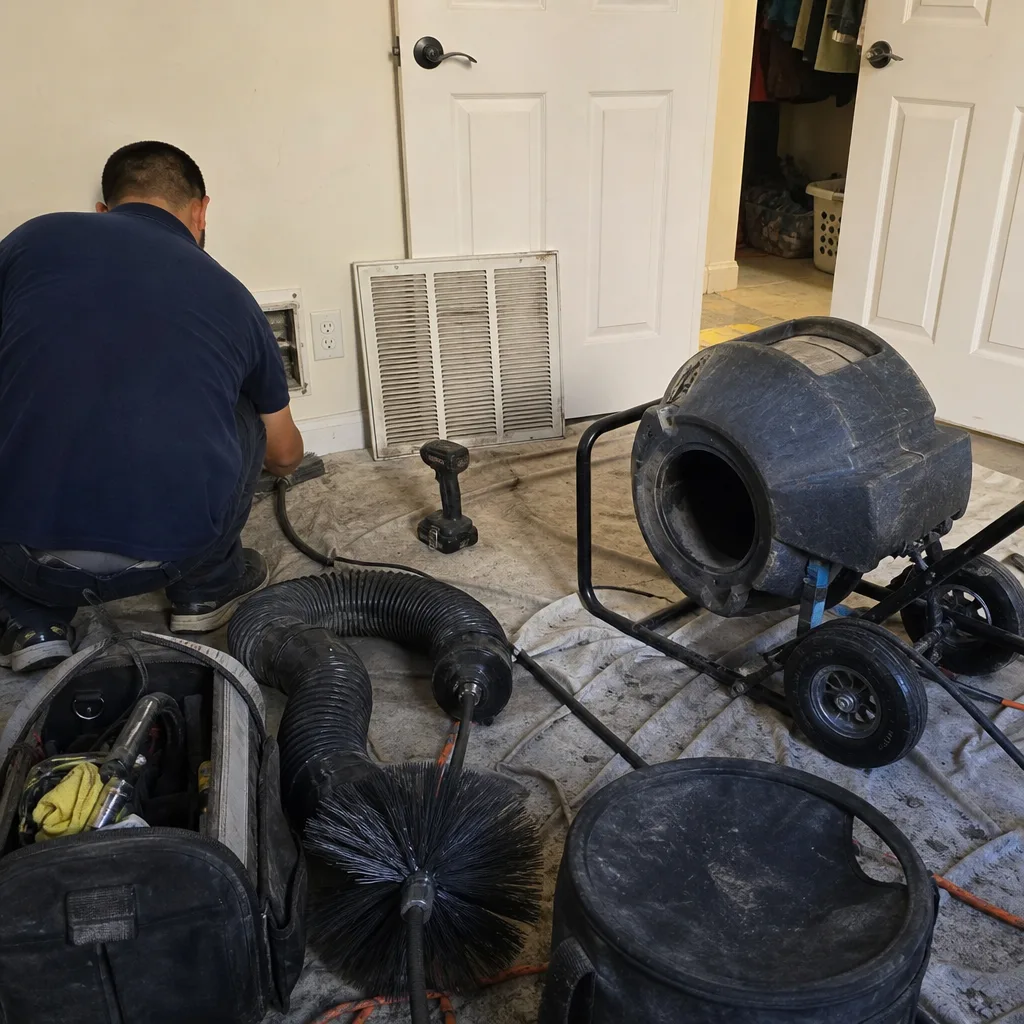 Before
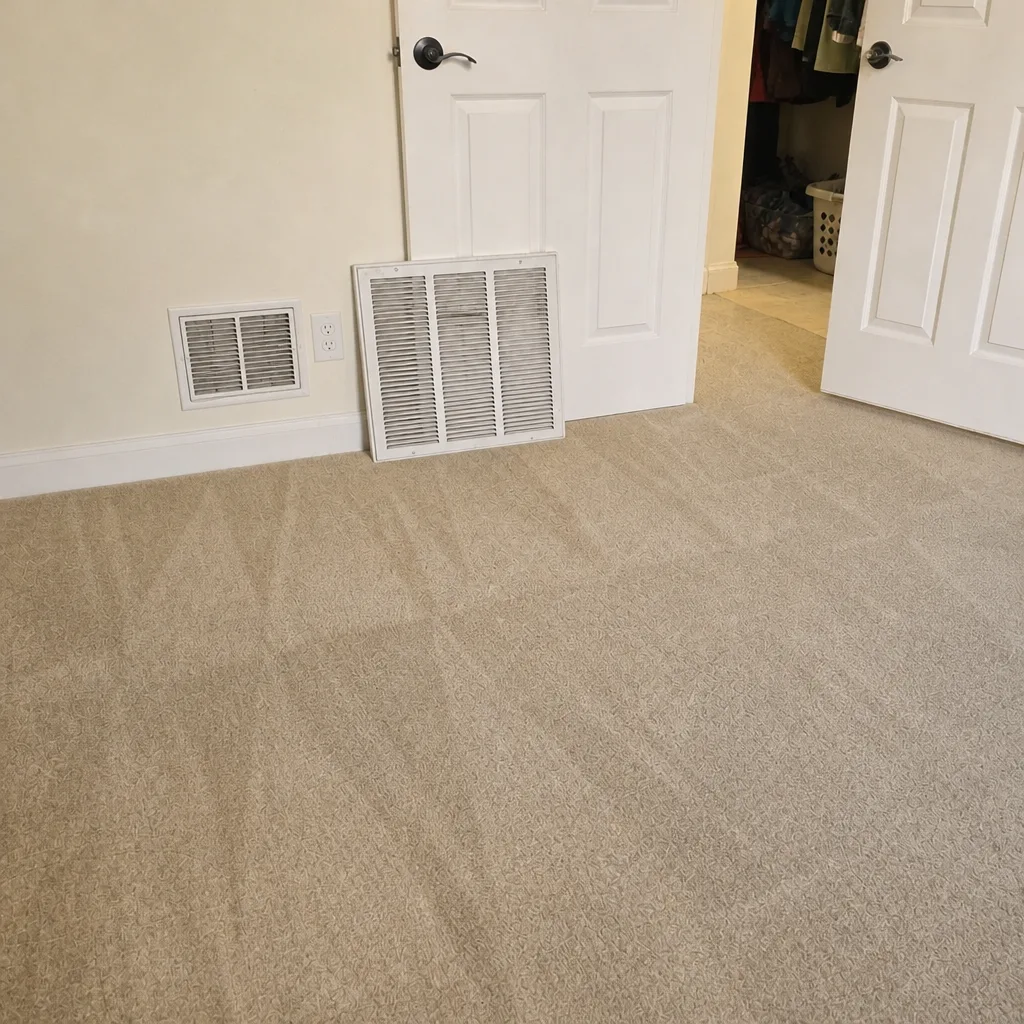 After
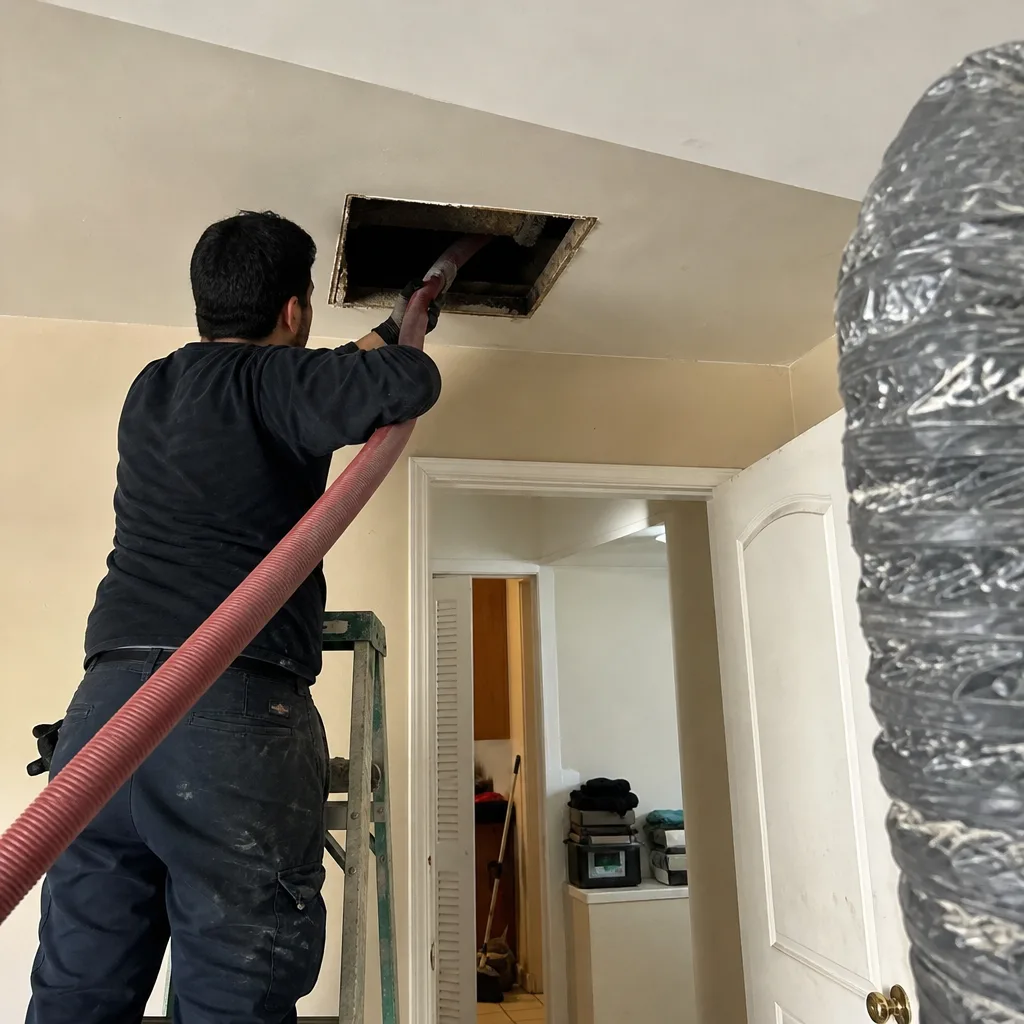 Before
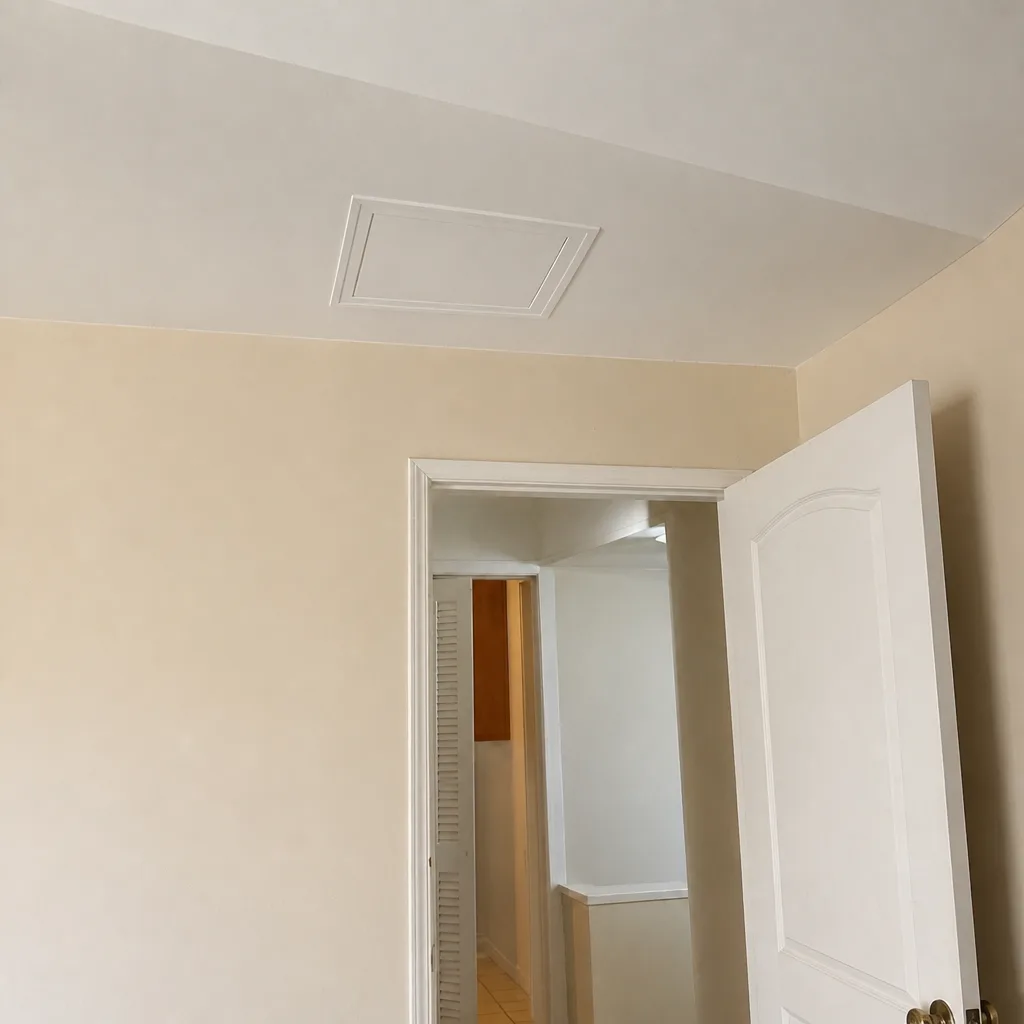 After
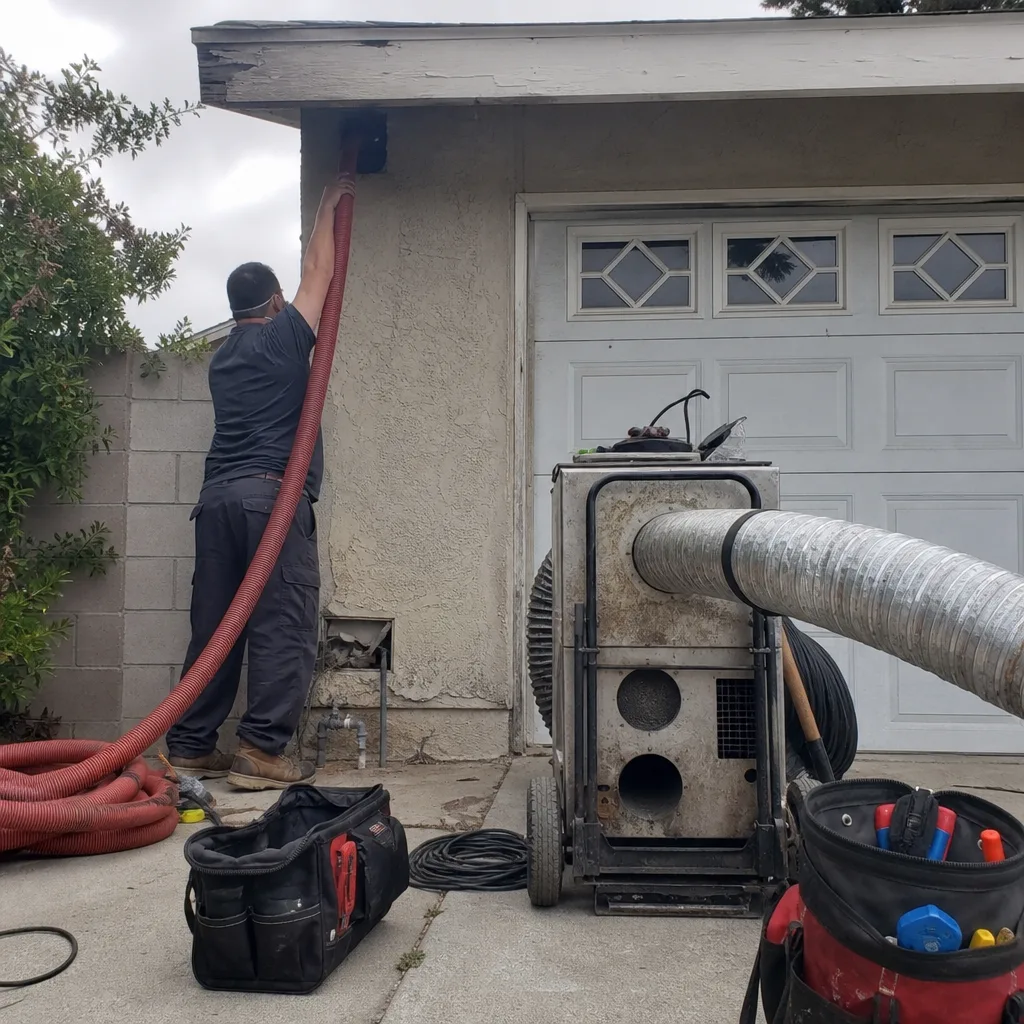 Before
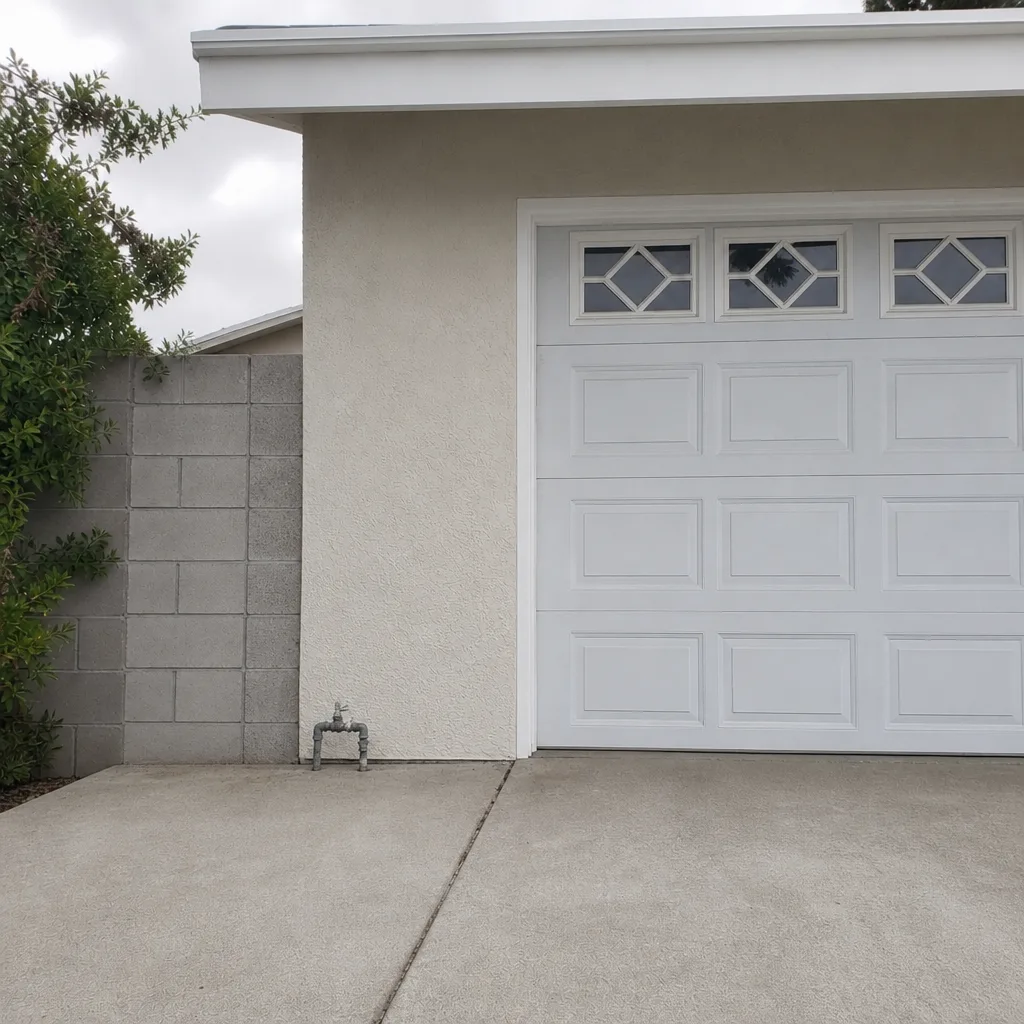 After
When to Call a Professional
Some situations demand professional duct cleaning rather than a wait-and-see approach. If you’ve just completed a renovation in your Chatsworth home, especially one involving drywall work or flooring removal, the ducts likely have construction dust in them, and that dust will circulate through the house for months unless removed. If you’ve moved into a resale home and don’t know the duct cleaning history, the system may contain years of accumulated material from previous occupants. If a family member has respiratory conditions or persistent allergy symptoms that improve when they leave the house, the ducts are a reasonable place to investigate. If you see visible debris at the register openings, hear debris moving in the ducts when the system cycles on, or smell a musty odor when the fan runs, it’s time to have a professional look. Duct Cleaning Chatsworth offers free estimates in Chatsworth: call (888) 494-4745. We answer 24/7. Fast dispatch from 7am to 7pm, Sunday through Friday.
Frequently Asked Questions
A legitimate whole-house air duct cleaning in Chatsworth typically runs in the hundreds to low thousands of dollars depending on the number of registers, the number of systems, the duct material, and the degree of contamination. It is not a $49 service, and any company advertising that price is not performing a real cleaning. The final price should be set by a written estimate after a physical walkthrough. Call (888) 494-4745 for a free estimate.
Cheaper quotes come from companies using consumer-grade vacuum equipment, skipping the negative air collection, or planning to upsell you aggressively once they’re in the house. The equipment gap explains most of the price difference: professional-grade Rotobrush and Nikro systems cost tens of thousands of dollars, and legitimate companies must carry insurance and workers’ comp. A quote that’s dramatically cheaper than the market is not a deal; it’s a different service being marketed under the same name. Call (888) 494-4745 for an exact quote. Estimates are free.
You know the work was done because the contractor should provide before-and-after camera documentation from inside your actual ducts, showing the same access points and the same duct sections in both images. If the company can’t produce this documentation, there’s no way to verify the work, and an unverifiable cleaning is not a cleaning you should pay for. Insist on this standard before you agree to any service. Call (888) 494-4745 to ask about our documentation standards.
There’s no universal schedule, but most homeowners in Chatsworth should consider duct cleaning every three to five years, with shorter intervals for homes with pets, recent renovations, smokers, or chronic allergy sufferers. The Chatsworth area gets fine wind-driven dust through the Santa Susana Pass in certain seasons, which can shorten the interval for some homes. A contractor who tells you it needs to be done every year is likely running a recurring revenue model, not an assessment-based schedule. Call (888) 494-4745 for an honest assessment of your system.
No permit is required for air duct cleaning itself in Chatsworth, but the contractor performing the work must hold a valid CSLB license if the job exceeds $500 in labor and materials. Some duct repair work may require a permit depending on the scope, and your contractor should tell you if that’s the case. Always verify the CSLB number before work begins.
Yes, a first-time duct cleaning in a home that’s accumulated 10 or more years of material can remove a substantial amount of debris: pet hair, skin cells, carpet fibers, construction dust, and the fine gray powder that builds up in every duct system over time. What’s in your air between filter changes is the real question, and the answer in an older never-cleaned system is typically a lot more than most homeowners expect. The cleaning can also reveal duct damage that needs repair, which is valuable information. Call (888) 494-4745 to schedule a free walkthrough and estimate.
The Bottom Line
Hiring an air duct cleaning contractor in Chatsworth comes down to three steps: verify the documents, read the quote, and demand documentation. Request the CSLB number, liability certificate, and workers’ comp cover before anyone enters your home. Walk away from flat-rate quotes with no scope detail, and be suspicious of any price that seems too good to be true, because in this industry, it almost always is. Ask the equipment question. Ask the repair question. Ask about dryer vents. A dedicated indoor-air-quality specialist with professional-grade equipment from Rotobrush, Nikro, or Abatement Technologies will answer all of these questions with specifics, not deflections. A generalist or a scammer will fall apart. The filter works, but only if you actually run the filter. You don’t need to be a duct cleaning expert to hire one; you just need to ask the right questions and refuse to accept vague answers.
Written by the team at Duct Cleaning Chatsworth, serving Chatsworth since 2017.