
How to Choose the Right Air Duct Cleaning Company in Chatsworth
Choosing the right air duct cleaning company in Chatsworth comes down to three things: equipment disclosure, process transparency, and whether the company can describe exactly what happens inside your ducts before the job starts. If they can’t answer those questions in plain terms, keep looking. A company that knows its craft will volunteer the details, because the details are what separate a real cleaning from an expensive wave of a vacuum wand.
If you’d rather skip the homework and talk to a specialist directly, call (888) 494-4745.
The Five Technical Questions to Ask Before Booking
Most homeowners shop for duct cleaning the same way they shop for a haircut: price first, reviews second, and hope third. But ductwork is a mechanical system, not a style choice. What happens inside it is measurable, visible, and directly affected by the tools a company brings to the job. Here’s what to ask, and what a competent answer actually sounds like.
1. What machine are you bringing, and who makes it?
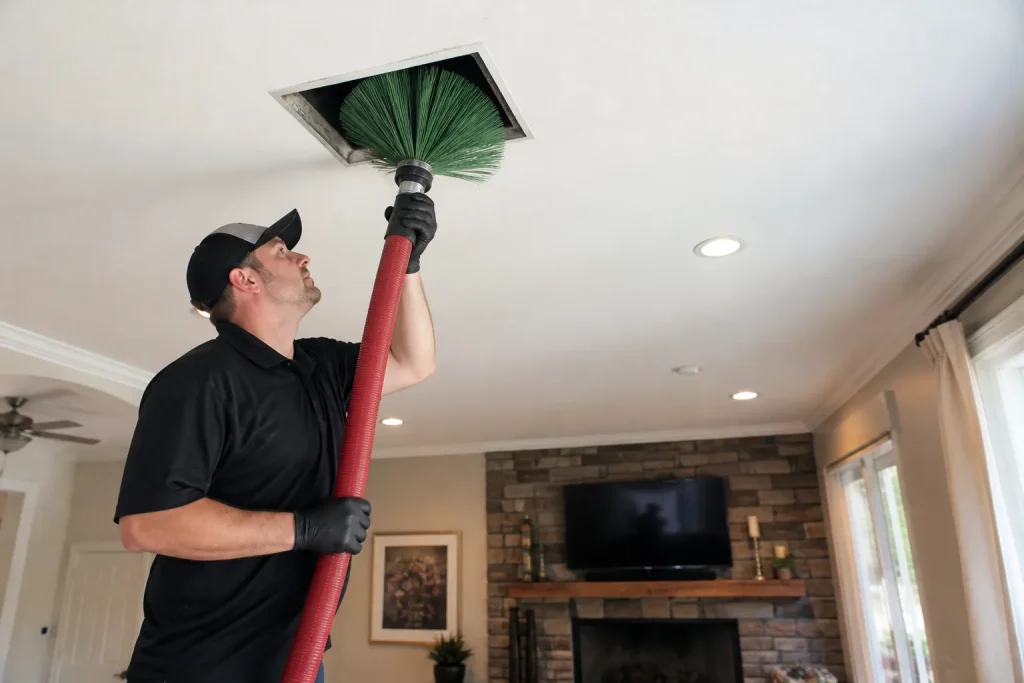
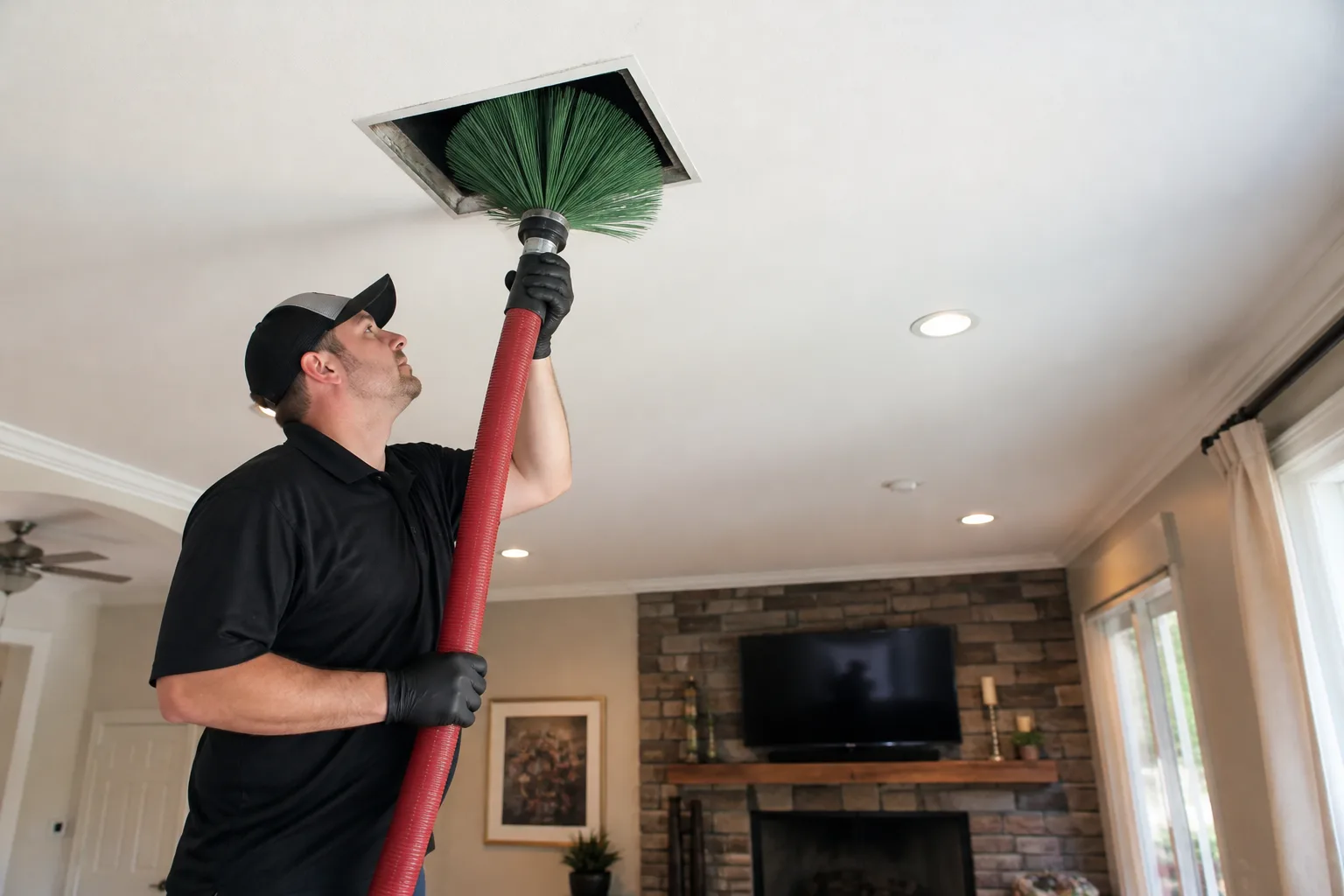
A legitimate company will name the equipment. If you hear “a professional vacuum system” and nothing more specific, you’re getting a vague answer for a reason. In our van, you’ll find Rotobrush and Nikro systems, the same platforms used in NADCA-aligned cleaning protocols. These are powered agitation and negative-air machines, not a shop vac with a long hose. When a company invests in industrial-grade equipment, it means they do this work regularly enough to justify the cost.
2. How do you agitate the debris?
Dust doesn’t politely lift itself off duct walls because a vacuum is running somewhere downstream. It’s adhered to the metal by static, moisture, and years of cooking grease and skin cells. Professional systems use rotating brushes or compressed-air agitation to break that bond. Ask the company whether their process mechanically scrubs the duct surfaces or relies on suction alone. Suction alone leaves a film behind.
3. How do you manage the exhaust end?
The whole point of negative-air cleaning is that the duct system is sealed under vacuum so debris flows to a collection point, usually a HEPA-filtered unit outside or at the furnace. If the company can’t explain how they prevent dust from re-entering your living space during the job, they may not be containing it at all. A proper setup creates negative pressure in the duct run, captures the debris at the machine, and releases filtered air. Ask to hear those words.
4. What access points will you open?
You can’t clean what you can’t reach. A good technician will open access at the supply plenum, the return, and sometimes at branch runs, then seal those openings properly afterward. If the plan is to “go through the registers,” ask how they’ll clean the trunk line. Registers are the last few feet of a much longer system. This is where generalist companies cut corners, because opening and resealing access points takes time.
5. How will you verify the work?
Before-and-after photos should show the same duct run from the same angle, with visible change on the metal surface. Not a stock image. Not a photo of a clean register cover. We photograph the interior of the duct itself, because that’s the surface you’re paying to change. If a company can’t show you the inside of the duct after cleaning, they’re asking you to take it on faith.
Why “NADCA-Certified” Is a Baseline, Not a Guarantee
NADCA, the National Air Duct Cleaners Association, sets HVAC cleaning standards that include equipment specifications, process steps, and safety protocols. When a company in Chatsworth advertises NADCA certification, that’s meaningful: it means someone in the organization studied the standard and passed an exam.
But certification is a credential, not a live audit of your specific job. A technician can be NADCA-certified and still rush a job, skip an access point, or cut the agitation time short because the schedule is overbooked. The certification tells you the company knows what the standard says. It doesn’t guarantee the standard was applied to your ducts on a Tuesday afternoon.
This is why the questions in the previous section matter. You can audit compliance in real time by asking the technician to walk you through the process before they start. Which machine are they using? Where’s the access point? How are they managing the exhaust? A certified professional who follows the standard will have clear answers. A certified professional who waves off the questions with “don’t worry, we’ve done this a thousand times” is describing a routine, not a process.
One more thing: NADCA-aligned protocols reference specific equipment platforms, and companies that own that equipment can tell you. We run Rotobrush and Nikro systems for a reason. The tool matters because the standard assumes a certain level of mechanical agitation and negative-air capture. Without it, the process is incomplete no matter what certificate hangs on the wall.
Dedicated IAQ Specialist vs. Generalist HVAC Company
A full-service HVAC company does many things: installs furnaces, services air conditioners, maybe sells maintenance plans on the side. Duct cleaning is one line item on a long menu. That’s not a criticism, it’s a description of focus. Every hour a generalist spends training on compressor diagnostics is an hour not spent on duct system anatomy.
A dedicated indoor air quality company lives in the ductwork. The technicians know how supply and return systems move air, where debris accumulates in a Chatsworth home with a central return versus one with multiple returns, and what to do when they find a disconnected boot or a crushed flex run during cleaning. At Duct Cleaning Chatsworth, our entire scope is three services: air duct cleaning, dryer vent cleaning, and air duct repair. No furnaces, no condensers, no scope creep. Every tool in the van is purpose-built for ducts and ventilation systems.
That specialization also shapes the equipment budget. A company running five trucks for five trades can’t put industrial duct-cleaning gear on every truck. A company that only does ducts can, and does, because the equipment is the business.
When you’re comparing options in Chatsworth, ask the company what percentage of their revenue comes from duct cleaning. A dedicated specialist will know the answer without math.
How to Evaluate Before-and-After Documentation
Legitimate duct cleaning proof looks boring. It’s a photo of the inside of a metal duct, same angle, before and after. The before image shows a gray-brown film, maybe visible debris at the seams. The after image shows the metal surface, sometimes with visible scratch marks from the agitation brushes. If you’re lucky, the company provides video of the rotating brush passing through the duct while the camera records in real time.
Here’s what legitimate documentation is not:
- A photo of a clean air filter next to a logo
- A smiling technician holding a thumb up in front of an open van
- A wide shot of a living room with the text “fresh air!” overlaid
- A stock photo of ductwork from a library
- The same photo attached to multiple customers’ invoices
Ask the company how they document their work. The answer should include “photo or video of the duct interior” and “same access point before and after.” If the answer is “you’ll know because it’ll feel cleaner,” that’s not documentation, that’s marketing. We photograph the surfaces we’re paid to clean, because the evidence is the product.
Chatsworth-Specific Vetting: Check the Service Area Concentration
A crew that services five counties in a single day is doing recon, not cleaning. Time is a tool in this trade. Proper agitation of a full residential system takes hours, not minutes, and a company that books four jobs spread across Ventura, Los Angeles, and San Bernardino counties on the same truck is either rushing all four or lying to three of them.
For homeowners in Chatsworth, this matters. The San Fernando Valley has its own housing stock patterns: older homes in the flatlands, newer construction up the hillsides, and a mix of central and zoned systems depending on when the house was built. A company that concentrates its work in the Valley sees those patterns repeatedly. A company that parachutes in from Riverside for one job doesn’t know that a 1970s Chatsworth ranch with a central return collects dust differently than a 2005 tract home with multiple returns.
Ask where the company usually works. If the answer is “the whole LA area,” that’s a flag. If the answer names specific Valley neighborhoods and the company’s reviews cluster around them, that’s a company that knows the territory.
Equipment Disclosure: The Quickest Way to Sort the List
There’s a simple phone-screen question that eliminates most bad options in under a minute: “What machine will your technician bring to my house, and who manufactures it?”
A company that answers with a brand name and model platform knows its own operation. A company that says “a truck-mounted system” or “industrial equipment” without specifics is describing equipment it might not own. The follow-up question is “which system?” and the follow-up after that is “why that one?”
We run Rotobrush and Nikro systems because they pair mechanical agitation with negative-air capture, the two things a duct cleaning actually requires. We also keep Abatement Technologies equipment on hand for compromised duct environments, which most residential jobs don’t need but some do, and you don’t want to discover mid-job that you’re the exception and the company isn’t prepared. We’re also familiar with Honeywell and Aprilaire product lines, because clean ducts connected to a sub-par filtration setup just re-contaminates faster, and sometimes the right answer is cleaning plus a better filter, not cleaning alone.
The point of asking is not to test the company’s memory for brand names. It’s to force the disclosure. A company that won’t say what it’s bringing is a company that doesn’t want you to know.
When to Call a Pro
Duct cleaning is not a DIY weekend project. The access points, the negative-air setup, the agitation equipment, and the sealing afterward all require training and gear that a homeowner doesn’t have. What’s more, cutting into a duct without knowing how to seal it properly creates leaks that reduce system efficiency and pull unfiltered attic air into your living space. If you suspect significant debris, rodent activity, or compromised duct sections somewhere in the run, call a specialist rather than renting a machine and hoping.
Related services in Chatsworth: if your dryer takes two cycles to dry a load, that’s a dryer vent cleaning issue, and it’s a fire risk, not a convenience problem. We treat it as a standalone safety service, not an upsell.
The Bottom Line
Choosing an air duct cleaning company in Chatsworth is a process of elimination. Ask what machine they’re bringing. Ask how they’ll agitate the debris and manage the exhaust end. Ask what access points they’ll open and how they’ll verify the work. Ask where they usually work. The companies that survive those questions are the ones you want in your home. The rest were always going to underdeliver, and now you know it before the van shows up.
If you’re in Chatsworth and need help, Duct Cleaning Chatsworth offers free estimates. Call (888) 494-4745. We answer 24/7. Fast dispatch from 7am to 7pm, Sunday through Friday.
Frequently Asked Questions
The price depends on the size of the system, the number of returns, and the condition of the ductwork. A written estimate after an on-site evaluation is the only honest number, and it’s free. Call (888) 494-4745 to schedule one.
Low-price duct cleaning usually means one of three things: suction-only equipment with no mechanical agitation, skipped access points, or a company that treats duct cleaning as a lead generator for other services. Professional-grade equipment and thorough process cost money, and the quote reflects that.
Ask for before-and-after photos of the duct interior from the same access point. Legitimate documentation shows visible change on the metal surface itself, not a stock image attached to an invoice.
It depends on the home. Homes with pets, renovation history, or visible debris at the registers may need cleaning more often. A professional evaluation during a free estimate can tell you what your specific system needs. Call (888) 494-4745 to ask.
Written by the team at Duct Cleaning Chatsworth, serving Chatsworth since 2017.
Need Air Duct Cleaning Help?
Call Duct Cleaning Chatsworth - licensed & insured, here with fast help in Chatsworth.
(888) 494-4745